Planning guide
Traveling With Two Dogs: The Accommodation Planning Guide
Book for two individual dogs—not just a listing that happens to allow pets.
By Paws & Passage Editors · Last reviewed 2026-11-16 · 11 min read
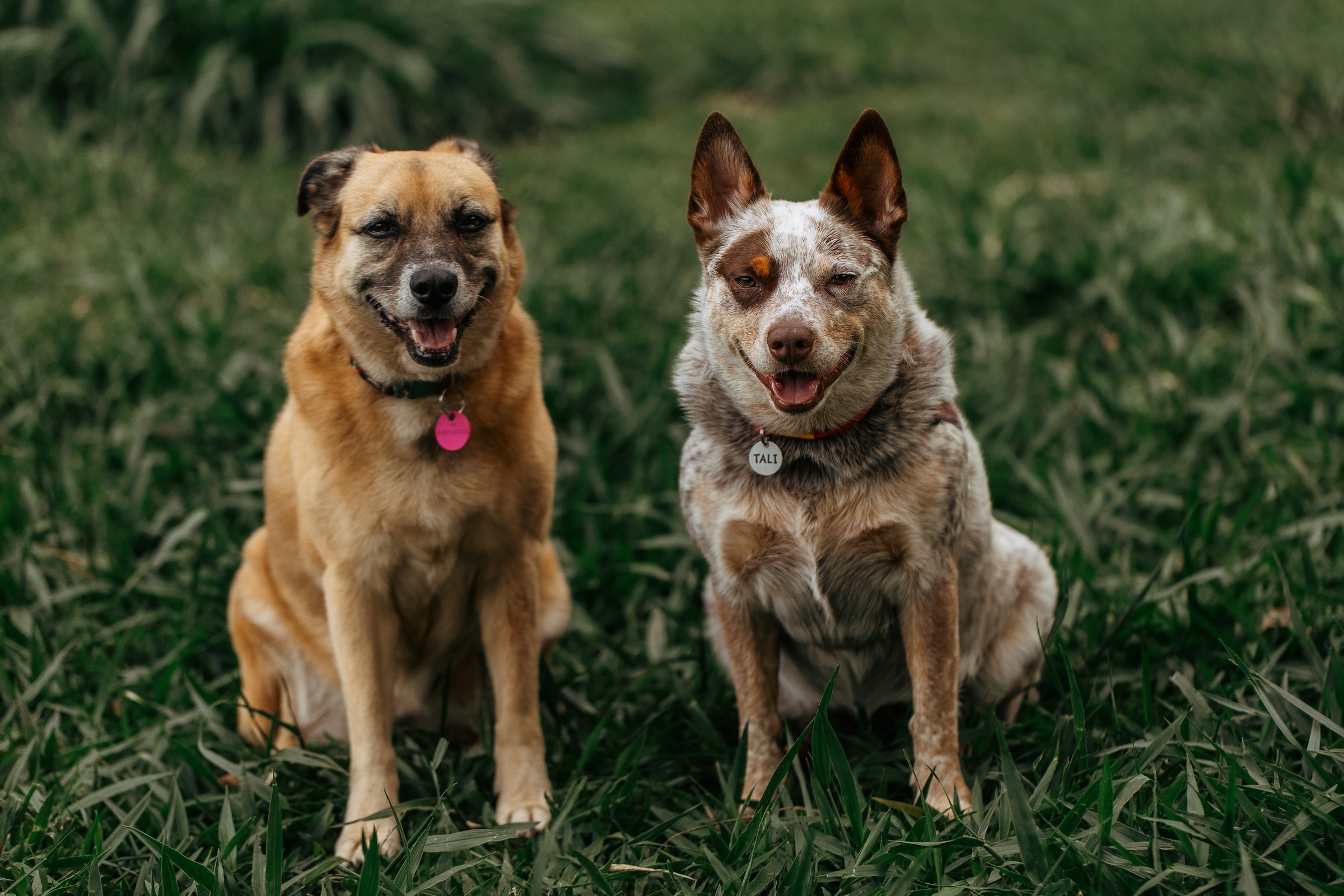
The second dog changes the accommodation brief
A rental can allow two dogs and still be a poor place to stay with yours. Perhaps the only bedroom door separates you from both dogs rather than separating them from each other. Perhaps “50-pound limit” applies to their combined weight. Or the advertised pet fee turns out to be per dog, per night.
Start with four requirements: written acceptance of both dogs, a complete price, enough usable space to manage them separately, and a workable routine when you leave the accommodation. A yard is helpful, but it cannot replace any of those.
This guide focuses on pet dogs. Service animals have different legal and platform protections; they should not be treated as an ordinary two-pet booking.
Make a separate brief for each dog
Before searching, write down each dog's needs. This is more useful than deciding that they are “good travelers” as a pair.
| Detail | Dog one | Dog two | What it changes |
|---|---|---|---|
| Current weight | Record actual weight | Record actual weight | Individual or combined limits |
| Stairs and slippery floors | Comfortable or needs help | Comfortable or needs help | Entrance and room layout |
| Resting arrangement | Bed, room, or familiar crate | Bed, room, or familiar crate | Usable floor space |
| Meals and valued objects | Any guarding history | Any guarding history | Separate feeding areas |
| Alone-time tolerance | Describe demonstrated behavior | Describe demonstrated behavior | Whether outings are realistic |
| Car needs | Restraint, space, medication | Restraint, space, medication | Vehicle capacity and stops |
One dog's confidence does not establish the other's comfort. Equally, two dogs who relax together at home may need more distance around meals, doors, or unfamiliar noises while away.
If either dog has significant anxiety, pain, motion sickness, or a history of aggression, discuss the trip with your veterinarian before making a nonrefundable booking. The AVMA's travel guidance is a useful starting point for health records, identification, transport preparation, and veterinary conversations.
Confirm that “two dogs allowed” means your two dogs
A pet-friendly search result is a lead, not approval.
Airbnb specifically recommends contacting the host even when a listing allows pets, explaining which animals you intend to bring, and checking restrictions. Its search lets travelers add pets with the guest details or select “Allows pets” in the filters. Neither action establishes that every size, breed, or combination is accepted. [1]
Ask about individual and combined weight
These phrases are not interchangeable:
| Wording | What you still need to know |
|---|---|
| “Two dogs allowed, 50-pound maximum” | Is that 50 pounds each or together? |
| “Dogs under 50 pounds” | Does “under” exclude a dog weighing exactly 50 pounds? |
| “Two small dogs considered” | What sizes qualify, and is approval required? |
| “Maximum two pets” | Is that per unit, reservation, or traveling party? |
| “Larger dogs by arrangement” | Has the exception been approved for your booking? |
Do not assume that two dogs under an individual limit satisfy an unstated combined limit. Conversely, do not reject a promising listing solely because its wording is unclear: ask first.
For two larger dogs, use our large-dog accommodation guide alongside this one.
Send a message that can receive a clear yes
Try this:
“We are considering a three-night stay with two dogs: a 42-pound adult mixed breed and a 58-pound adult Labrador. Please confirm that both dogs are accepted together, whether any weight limit is individual or combined, and the complete pet charge for this stay. We also need two separate feeding areas and would like to confirm your unattended-pet and crate rules.”
Add accurate information about age, behavior, and any property-specific restriction. Do not promise silence, perfect behavior, or uninterrupted crating if you cannot support that promise.
Keep the reply in the platform message thread. If the answer conflicts with the listing, ask the host to clarify the applicable terms before paying. Our host-question tool helps keep these details together.
Calculate the two-dog price before comparing stays
The word “pet fee” leaves three important variables unanswered: how many dogs, how many nights, and whether a cap applies.
Airbnb's current help page describes four possible structures: per booking, per night, per pet, and per pet per night. Advice that assumes its pet fees must always be a single flat amount is incomplete. [2]
Here are clearly hypothetical examples for two dogs staying three nights:
| Fee wording | Calculation | Pet charge |
|---|---|---|
| $80 per booking, covering both dogs | $80 once | $80 |
| $30 per night, covering both dogs | $30 × 3 | $90 |
| $45 per dog per stay | $45 × 2 | $90 |
| $20 per dog per night | $20 × 2 × 3 | $120 |
| $20 per dog per night, $100 total cap | $120 reduced to stated cap | $100 |
These are examples, not market averages or property quotes.
Ask whether the quoted pet charge is additional to the ordinary cleaning fee, whether applicable tax is included, and whether any refundable deposit or authorization hold is separate. A refundable amount affects your available cash or credit even when it is not ultimately a trip expense.
Compare the full accommodation total for the same dates and both dogs—not the nightly headline or pet charge alone. Use the cost calculator and our pet-fee explainer for a fuller breakdown.
Choose a layout with two usable zones
Bedroom count is a weak substitute for a floor plan. A spacious studio may have no secure separation. A smaller one-bedroom unit may offer a bedroom and living room that work well for familiar routines.
Look for:
- Two resting locations away from the main entrance.
- Two feeding areas that can be physically separated.
- Enough floor space for each dog's familiar crate, if used.
- Clear walking routes around beds and crates.
- A closable door when a visual barrier is not enough.
- A practical route outside that does not force both dogs through a narrow bottleneck.
- A place to dry or wipe one dog while the other waits safely.
Ask whether bedroom doors latch and whether the room in the photographs is available to guests. An owner's locked room does not count as a separation option.
Measure the equipment, not just the room
A host may reasonably say that a room fits a large crate without knowing the size of yours. Send the crate's external dimensions, including the space needed to open its door.
For two crates, consider both footprints and the route between them. Do not plan to wedge crates between furniture, block an exit, place them against heaters, or use an unfamiliar crate as an emergency behavior solution.
Crating is useful only when the individual dog is comfortable with it and the host's rules allow your intended arrangement. A rule requiring crating does not make an anxious dog ready to be left crated in a new building.
Plan meals and resources before arrival
The ASPCA explains that resource guarding can involve food, toys, chew items, and scavenged objects. It describes separate rooms, crates, and barriers as management options for feeding and recommends consulting a certified applied animal behaviorist (CAAB/ACAAB) or a veterinary behaviorist, rather than attempting treatment on your own, if you think a dog is likely to bite. [3]
For a trip, the practical lesson is simple: do not use a holiday rental to test whether the dogs can share more closely than usual.
A low-conflict feeding routine
- Set up separate areas before opening food.
- Put each dog in the appropriate space.
- Feed without allowing either dog to approach the other.
- Pick up bowls and leftover food before reuniting them.
- Keep food storage and rubbish inaccessible.
If either dog guards, use the separation method recommended by your veterinarian or qualified behavior professional. A baby gate is not adequate merely because it is convenient; it must be appropriate for the dogs and the situation.
Avoid scattering high-value treats between both dogs, giving chews together in a cramped living room, or leaving a single prized toy in a shared resting area. Take familiar beds rather than relying on one attractive rental-provided bed.
Stiffness, freezing, growling, snapping, or blocking access deserve attention—not an assumption that the dogs will sort it out. The ASPCA's aggression guidance describes warning behaviors and recommends a veterinary check followed by a qualified behavior professional. It also warns that people are often bitten when they try to break up dog fights, because of redirected aggression, so plan to avoid an improvised confrontation over a guarded object. [4]
Treat the car as part of the booking decision
A property is not a good fit if reaching it requires an unsafe vehicle arrangement.
Before committing, load the actual restraints or secured carriers, both dogs' equipment, and your luggage. Confirm that each dog has an appropriate place without loose cases stacked around them or supplies obstructing access.
The AVMA recommends preparing for pet travel, safely restraining dogs with harnesses, tethers, or similar accessories, and never leaving pets unattended in a car. It advises talking to your veterinarian about carsickness, and cautions against tranquilizers or sedatives for travel without veterinary advice. [5]
Work through the solo-driver problem
With one adult and two dogs, the awkward moments are often fuel stops, toilets, food collection, and arrival—not the motorway.
Plan a route and stops that do not depend on leaving the dogs in a parked car. Pack water and essential supplies where you can reach them without dismantling the load. Keep a separate lead for each dog, even if you sometimes use a coupler on familiar walks.
At a stop:
- Secure each dog before opening the relevant vehicle door.
- Check the surroundings before unloading.
- Avoid handling luggage and both leads simultaneously.
- Keep the dogs separated from unfamiliar animals.
- Reload deliberately rather than rushing because another driver is waiting.
If you cannot manage essential stops safely alone, change the travel arrangement, bring another capable adult, or choose a shorter journey. That is a planning constraint, not a failure.
Make arrival boring on purpose
Do not begin by opening the car and letting both dogs explore while you carry bags.
First, establish who is handling the dogs. If two adults are traveling, one can inspect the entrance and interior while the other remains with them. If you are alone, arrange arrival so inspection and unloading do not require leaving dogs unattended in the vehicle; ask the host about access and assistance beforehand.
Check for open doors, accessible food, rubbish, pest-control products, fragile objects at tail height, and routes to balconies or pools. Photograph existing damage without turning the arrival into an extended inspection session for the dogs.
Then:
- Take a calm toilet break on leads.
- Bring the dogs inside under control.
- Set out familiar beds and water.
- Establish the separate feeding spaces.
- Put food and valuables away.
- Keep the first stretch of the stay quiet.
For a fenced property, inspect the entire boundary before relying on it. Shared gates, low sections, gaps underneath, and direct access to water matter more than a listing's “enclosed” label. Use our secure-yard guide to structure that check.
Solve unattended time before planning outings
Some accommodations prohibit leaving pets alone; others require crating or impose conditions. Veterinary lodging guidance from VCA recommends checking this before the stay rather than assuming it is permitted. [6]
There are two separate questions:
- Does the host permit the arrangement?
- Can both dogs cope with it in this setting?
A host's permission answers only the first. Two dogs are not automatically comfortable alone because they have each other.
Do not book a long indoor attraction, wedding, or restaurant meal on the assumption that a camera will solve separation distress. A camera may help you observe behavior where permitted, but it cannot provide care or change the accommodation rules.
Arrange a realistic alternative: dog-inclusive activities, adults taking turns, or a confirmed caregiver whose access is permitted. Check whether visiting sitters count as additional visitors under the house rules.
Compare the awkward details, not the welcome basket
Use the comparison tool to score shortlisted accommodation against requirements that actually affect your stay.
| Requirement | Essential or preferred? | Evidence to save |
|---|---|---|
| Both dogs accepted | Essential | Written confirmation |
| Weight and breed conditions satisfied | Essential | Applicable rules and approval |
| Complete two-dog price | Essential | Quote and checkout total |
| Separate meal spaces | Essential if needed | Layout or host description |
| Suitable stairs and floors | Depends on dogs | Photos and measurements |
| Unattended routine works | Depends on itinerary | Rules and care plan |
| Private fenced yard | Preference or essential | Boundary details and current photos |
| Easy late-night toilet route | Often highly useful | Access description |
A cheaper stay may cost more in sitter arrangements, driving, and daily friction. A more expensive rental is not automatically better either: extra square footage does little if every room is open-plan and you need a door.
Common mistakes to avoid
Declaring only one dog
Do not assume the second dog is included because the platform accepted a booking. Disclose both pet dogs and confirm the applicable fee.
Assuming the dogs must share everything
Pack separate bowls, resting places, and necessary medication records. Familiarity is not a reason to create competition.
Letting the yard replace walks and supervision
A fenced yard is a convenience, not a complete exercise plan or proof that the dogs can be left outdoors.
Choosing a property around the easier dog
The less mobile, more anxious, or more management-intensive dog often determines the accommodation requirements. Plan for that dog without denying the other an appropriate routine.
Booking without an exit plan
Know the cancellation terms, nearby veterinary options, and what you would do if either dog cannot settle. Keep enough flexibility to shorten or change a trip rather than forcing an unsafe arrangement.
Your final two-dog booking checklist
- Both dogs are described accurately and accepted in writing.
- Individual versus combined weight rules are resolved.
- The fee calculation includes two dogs and the actual number of nights.
- Deposits, cleaning charges, and applicable taxes are understood.
- Each dog has an appropriate transport arrangement.
- Meals and rest can be separated where needed.
- Stairs, floors, doors, and outdoor access suit both dogs.
- Unattended-pet rules match a realistic care plan.
- Arrival, stops, and unloading work with the adults traveling.
- Records, identification, medication, and emergency contacts are packed.
Save the trip-specific version in the travel checklist, then use our vacation-rental checklist for the rest of the booking. The right accommodation should reduce the number of things you have to manage—not simply admit both dogs through the door.
Questions people ask
Does a two-pet limit mean two dogs of any size?+
No. Count, weight, breed, and approval requirements can apply separately. Give the host both dogs' details and ask whether any weight limit is per dog or combined.
Will I pay two pet fees?+
It depends on the fee structure. A charge may cover the booking, each night, each dog, or each dog per night. Request a total for your exact dates and both dogs.
Do dogs who live together need separate feeding areas while traveling?+
Separate feeding areas are a useful precaution and are especially important when either dog has a guarding history or needs a managed routine. Follow professional advice for dogs with aggression concerns.
Can I leave two dogs together in a vacation rental?+
Only if the host permits the arrangement and both dogs can cope safely. Their ability to stay together at home does not establish that they will settle unattended in a new place.
Is a fenced yard essential for traveling with two dogs?+
Not necessarily. A safe, manageable toilet route may be enough. If a yard is essential to your routine, verify its boundaries, gates, exclusivity, and suitability for each dog rather than relying on a filter.
Sources and how we researched this
Before writing, we reviewed 5 of the pages that currently rank for this topic, noted what they leave out, and checked facts against the official sources below. We haven't stayed at or inspected any property for this guide. Read our editorial standards.
- Finding places that allow pets (Airbnb, accessed 2026-11-16)
- Charging pet fees (Airbnb, accessed 2026-11-16)
- Food Guarding (ASPCA, accessed 2026-11-16)
- Aggression (ASPCA, accessed 2026-11-16)
- Traveling With Your Pet (American Veterinary Medical Association, accessed 2026-11-16)
- Traveling With Your Pet: Pet-Friendly Hotels (VCA Animal Hospitals, accessed 2026-11-16)
Keep reading
Planning
How to Find Vacation Rentals That Welcome Large Dogs
Look beyond the pets-allowed filter to the rules, dimensions, and daily routines that make a stay workable.
11 min read · Reviewed 2026-11-16

Planning
How Pet Fees Actually Work at Vacation Rentals
Decode the fee wording, separate real costs from refundable money, and compare the total for your actual trip.
11 min read · Reviewed 2026-11-16
Planning
How to Find a Vacation Rental With a Truly Secure Fenced Yard
Look past the lawn photo: check the weakest boundary, the gate routine, and the evidence that matters for your dog.
11 min read · Reviewed 2026-11-16