Checklist guide
What to Check Before Booking a Pet-Friendly Vacation Rental
A practical booking audit for the dogs you have, the trip you want, and the rules you can actually follow.
By Paws & Passage Editors · Last reviewed 2026-11-16 · 13 min read
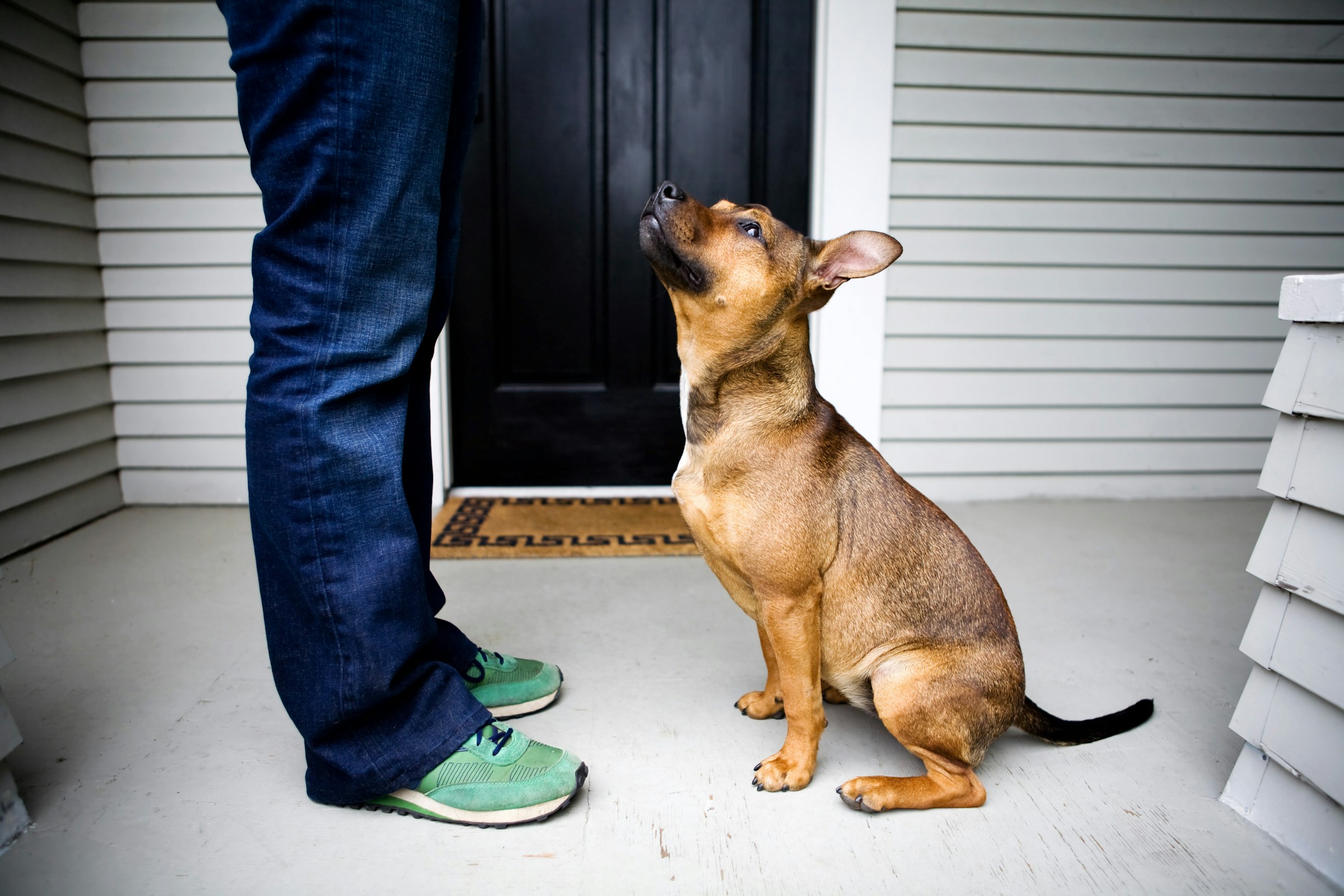
The most useful sentence in a pet-friendly listing is not “dogs welcome.” It is the written confirmation that your actual dogs can stay in the exact accommodation, on your dates, under rules your trip can realistically follow.
Before paying, resolve three things: permission, practicality, and total cost. A beautiful rental can fail any one of them. Two approved dogs do not help if the property forbids leaving them alone and your main activity excludes dogs. A low pet fee does not make a shared stairwell workable for a dog who struggles with close encounters.
Use this checklist in stages. Eliminate clear mismatches first, request missing details second, and save the final answers before booking. Our interactive checklist can hold the practical tasks; keep contractual answers in your booking messages as well.
The quick booking gate
Do not commit nonrefundable money until you can answer these questions for the exact listing:
- Are our dogs approved, including number, size, breed or mix, and any age restrictions?
- What is the complete price with the correct pet count and dates?
- Can we comply with furniture, crate, barking, and unattended-dog rules?
- Is the entrance, indoor layout, and toilet-break route suitable?
- If we need a fenced yard, do we have evidence of its actual boundaries?
- What cancellation deadline applies, and what becomes nonrefundable afterward?
- Are planned walks and activities legally accessible to dogs?
- Where will we get urgent veterinary care, including after hours?
An unanswered preference can sometimes wait. An unanswered deal-breaker cannot. If the host has not approved your second dog, don't assume adding that dog after payment is a formality.
Confirm permission for the exact dogs and accommodation
Read the whole listing, house rules, rental agreement, and any pet addendum available before payment. Check the exact unit, not merely the manager's portfolio or the resort's general policy. A dog-friendly development can still contain individually restricted homes.
Vrbo's house-rules guidance specifically allows hosts to state pet type, number, and size restrictions. Those details belong in your screening process, not just the pet-friendly search filter. [1]
State the relevant facts plainly: “We would bring two adult dogs, approximately 22 and 74 pounds, one terrier mix and one Labrador mix.” Ask whether each is permitted for the dates and unit you selected. If a restriction uses an unclear category such as “large,” ask for its definition.
Size, breed, count, and age limits
Check whether a weight limit applies per dog or to the dogs together. Ask whether puppies need separate approval and whether minimum-age, house-training, vaccination, or parasite-prevention requirements apply. If paperwork is required, establish what document is accepted and when it must be supplied.
Do not conceal a dog, understate weight, or treat a vague “should be fine” as an exception to an explicit written limit. Request a clear approval in the booking channel. If the host invokes insurer, association, or building restrictions, ask whether they have authority to approve your particular booking before relying on an exception.
For a size-focused search, use our large-dog accommodation guide. For two dogs, check our multi-dog booking guide, especially if the listing's pet allowance is unclear.
Calculate the actual price, not just the pet fee
Enter accurate travel dates, guest count, and pet count before comparing prices. A displayed nightly rate is not the same thing as your final accommodation cost. Save the final breakdown rather than relying on an earlier search result.
Airbnb's current help guidance describes pet fees that may be charged per booking, per night, per pet, or per pet per night. It also describes pet fees as covering expected pet-related cleaning. The practical lesson is to verify the unit of charging, not just the dollar amount. [2]
| Charge or condition | What to ask | What not to assume |
|---|---|---|
| Pet fee | Is it per stay, night, dog, or dog-night? | One displayed amount covers both dogs |
| General cleaning | Is it already in the total? | A pet fee replaces ordinary cleaning |
| Refundable deposit | How much is collected or held, and when is it released? | It is a nonrefundable fee |
| Damage waiver or protection | What does it cover, exclude, and require? | It eliminates guest responsibility |
| Taxes and platform charges | What is the final payable amount? | They are all captured in an early quote |
| Additional cleaning or damage | What process and evidence apply? | Paying a pet fee purchases permission for damage |
| Pet care | Does the itinerary require a sitter or day care? | The cheapest rental gives the cheapest trip |
For an illustrative calculation only, suppose a rental charges $20 per dog per night. Two dogs for three nights would create a $120 pet charge before any applicable taxes or other costs. That is not a market average or a quote; it demonstrates why the charging basis matters.
Use the cost calculator to compare complete stays. Keep refundable amounts separate from expenses, but include them in the cash you must have available. Our pet-fee explainer covers the terminology in more detail.
Keep payment requests consistent with platform rules
Airbnb requires mandatory fees to be disclosed before booking and generally requires their payment on-platform, with stated exceptions for some hosts. A later request to send a mandatory pet payment elsewhere deserves checking with platform support rather than an automatic transfer. [3]
For any booking channel, ask who collects each amount and where it appears in your reservation. Do not infer that a payment request is legitimate merely because it mentions a real property. If the quote and checkout disagree, resolve the discrepancy before paying.
Separate pet fees, deposits, and damage responsibility
A pet fee, a refundable deposit, and insurance are different things. Ask whether a deposit is actually charged, reserved as a card hold, or handled through another disclosed mechanism. Ask for release timing, deduction conditions, and the dispute route.
Vrbo's refund guidance describes refundable damage deposits and notes that the property's settings and pending claims can affect their return. Check the terms attached to your own reservation rather than assuming every listing follows the same payment schedule. [4]
Airbnb's host damage-protection description includes certain pet-related damage and extra cleaning, but that is protection for eligible host losses, not a promise that a guest can cause damage without financial responsibility. [5]
Before unpacking, photograph existing scratches, stained rugs, damaged screens, and anything else relevant to the stay. Send material concerns through the booking channel. If your dog causes damage, secure the dog, tell the host promptly, and follow the documented process. Do not try an aggressive cleaning product on an unfamiliar surface to avoid an awkward message.
Test the house rules against a real day of your trip
“Dogs allowed” does not tell you whether dogs can enter bedrooms, use furniture, or stay behind while you go out. Walk through an ordinary day on paper: breakfast, the main activity, dinner, bedtime, and a late-night toilet break.
Furniture and bedroom restrictions
Ask separately about sofas, chairs, beds, and bedroom access. A rule allowing a dog on a covered sofa does not necessarily allow them on bedding. Bringing a throw is considerate when furniture use is allowed; it does not override a prohibition.
If your dog sleeps with you at home, consider whether the required alternative is realistic. Ask whether there is space for their own bed near yours and whether closed bedroom doors will conflict with the rules. Choose a different rental rather than planning to hide a predictable rule violation.
Crate rules
Clarify whether a crate is required only when the dog is alone or at other times too. Ask about available floor space and whether the host provides a crate; if so, request its dimensions and condition. Do not assume “crate provided” means your dog will fit.
A rental rule does not make an unfamiliar crate comfortable for a dog who is not accustomed to one. Resolve that mismatch before booking. If your dog cannot safely follow a required confinement arrangement, change accommodation or arrange appropriate supervision.
Leaving the dog alone
Ask whether any unattended time is permitted, for how long, and under what conditions. Does “never alone” include a short restaurant pickup? Does “crated when unattended” include your dog? What happens if barking prompts a complaint?
Written permission is only half the decision. Your dog's ability to settle in an unfamiliar place is the other half. Have a plan that does not depend on leaving a distressed dog while you are out of reach. If you need a sitter or day care, check availability, admission requirements, pickup times, and suitability before making nonrefundable activity reservations.
Check the physical stay, from parking to bedtime
Ask about the route from car to door, shared corridors, stairs, slippery floors, and sleeping arrangements. A ground-floor bedroom may still require a long flight of steps from the parking space. Request current photographs when mobility or handling constraints matter.
For a dog who needs distance from others, ask about neighboring dogs, shared elevators, narrow entrances, and common toilet areas. “Quiet location” does not establish separation from other animals. For a dog with mobility limitations, measure the relevant steps and ask your veterinarian about individual needs rather than relying on a general accessibility label.
The toilet-break route
Find out where dogs may relieve themselves and whether that area is accessible at night. Is it private, shared, lit, grassy, paved, or across a road? Are waste bags and disposal facilities provided, or should you bring and carry your own supplies?
For an apartment, picture the last outing of the evening: harness, corridor, elevator, building exit, then the permitted relief area. That routine may be fine, but it is different from opening a back door. Bad-weather practicality belongs in the decision too.
Fencing and water
If off-leash yard time is essential, verify continuous physical boundaries, minimum height, openings, gates, and other people's access. Request pool separation details rather than assuming the outer property fence keeps the dog away from water.
Our secure fenced-yard guide provides the detailed photo request and arrival inspection. If the evidence is incomplete, mark off-leash use as unresolved and decide whether the stay still works with leashed breaks.
Understand service animals separately from pets
Service-animal access is not a way to bypass an inconvenient pet policy. Under the ADA, a service animal is generally a dog individually trained to do work or perform tasks for a person with a disability. Emotional support alone does not make an animal a service animal under that definition. [6]
Where ADA public-accommodation rules apply, staff may ask only the permitted disability-related service-animal questions when the need is not apparent; they cannot demand certification as proof of service-animal status. The DOJ guidance also addresses control, house-training, removal in specified circumstances, and limits on surcharges. Actual damage may be charged on the same basis as damage caused by other guests. [6]
Do not assume every private rental has identical legal coverage
Whether a particular accommodation is covered depends on the applicable law and facts. State and local protections, the rental arrangement, and platform policy can matter. Avoid treating a general ADA summary as a legal determination for every privately owned holiday home.
Airbnb's Accessibility Policy generally permits service animals despite no-pet rules and distinguishes service animals from emotional support animals. It also describes exceptions and jurisdiction-dependent protections; consult the current policy for the exact reservation. Airbnb's pet-fee guidance states that service animals stay without a pet fee. [7] [2]
Vrbo states that hosts in countries with service-animal laws must accommodate guests requiring service animals, regardless of the normal pet policy. Its help page links to the fuller policy. [8]
If there is a disagreement, contact platform accessibility support and seek appropriate legal guidance when necessary. Do not buy an online certificate expecting it to create legal status. Also do not assume a service animal may be left alone under the same conditions as an ordinary pet; check the applicable access rules and platform requirements.
Read cancellation terms before asking for exceptions
Save the policy shown for your booking, including the deadline, property time zone, refund percentages, and treatment of fees. Check whether there are separate terms for shortening the stay, changing dates, or removing a dog.
Vrbo's cancellation guidance describes several policy options a host can choose from, seasonal variations, and refund windows measured in the property's time zone. This is why a policy name alone is not enough: read the actual schedule attached to your dates. [9]
Do not assume a dog's illness, a rejected pet request, or a canceled activity automatically creates a refund right. If buying trip insurance, read covered reasons, pet-related provisions, exclusions, and documentation requirements. Ask the insurer about unclear scenarios rather than relying on a host's description of coverage.
Put the last useful cancellation date in your calendar. Resolve pet approval and deal-breakers before that date, not after. If listing information changes, document it and contact the booking provider promptly; do not assume a verbal assurance changes the written cancellation terms.
Verify local rules and an emergency plan
Check the official city, county, park, beach, or land-manager page for each place you intend to visit. Confirm leash requirements, seasonal and time-of-day restrictions, prohibited areas, waste rules, and any permit requirements. A rental being pet-friendly does not make a nearby beach or trail dog-accessible.
Look for a practical legal walking option close to the rental, including a backup if the main beach or trail is unavailable. Save the relevant official pages and check posted signs on arrival. If the rules are unclear, contact the authority responsible for that location rather than relying solely on a listing caption.
Find veterinary help before departure
Locate a routine clinic and an after-hours emergency hospital serving the actual rental location. Verify hours and whether the emergency provider can currently receive patients; a map label is not a guarantee. Save addresses, phone numbers, and a backup route offline.
AVMA advises calling your veterinarian or a local veterinary emergency hospital in an emergency so they can be ready when you arrive, and notes that first aid is not a substitute for veterinary care. Saving those numbers before you travel is how you make that call possible. [10]
Carry medication details, relevant records, your regular veterinarian's contact information, and identification information. Keep transport accessible at night. If mobile coverage is limited, download directions and ask how to contact the host without relying on a strong data signal.
Send one clear message, then compare the answers
Here is a practical starting point:
“We are considering [unit] for [dates] with [number, ages, approximate weights, and breeds or mixes]. Please confirm they are approved and share the complete pet rules and all charges. We need clarity on furniture, bedroom access, crates, unattended time, toilet areas, yard access, and any scheduled staff visits. Please also confirm the cancellation terms and any deposit or damage-protection requirement.”
Use the host-question tool to tailor it. For an ordinary pet booking, a clear written approval should name the relevant dogs and stay, not simply repeat “we're pet-friendly.” Keep service-animal questions on the appropriate accessibility-policy track instead of treating them as requests for pet permission.
| Decision | What it looks like | Next step |
|---|---|---|
| Bookable | Dogs approved, complete total, workable rules, suitable layout | Save the evidence and check cancellation once more |
| Pending | A material fee, restriction, or physical detail is unknown | Ask a specific follow-up before paying |
| Workable compromise | No off-leash yard, but a good legal walking route | Budget the time and accept the limitation explicitly |
| Reject | Your trip requires violating a rule or ignoring a known mismatch | Choose another stay |
Use the comparison tool for two or three realistic candidates. Keep deal-breakers separate from preferences: free bowls should not outweigh an unworkable alone-time rule. The right rental is the one that supports your actual days, not the one with the longest amenities list.
Reconfirm and inspect on arrival
Before departure, reread the saved rules, verify unresolved details, confirm check-in access, and check emergency contacts. Bring your own familiar bedding, leads, waste supplies, food, and any required crate; our cabin packing guide helps organize that last stage.
On arrival, secure the dog while you inspect exits, gates, accessible food, cleaning products, and obvious damage. Photograph material discrepancies and message the host through the booking channel. Keep a leashed toilet-break plan until any yard has been checked.
The goal is not to eliminate every inconvenience. It is to avoid discovering, after a long drive and a nonrefundable payment, that the permission, rules, or layout never matched the dog you brought.
Questions people ask
Does pet-friendly mean every dog is allowed?+
No. Check the exact unit and dates, dog count, weight, breed or mix, age, and any approval or paperwork requirements. Get explicit written confirmation before making a nonrefundable booking.
Can I leave my dog alone in a vacation rental?+
Only if the applicable rules permit it and your dog can comfortably manage the arrangement. Clarify time limits, crate conditions, and barking rules. Permission does not guarantee your dog will settle in an unfamiliar home.
Is a pet fee the same as a damage deposit?+
No. A pet fee is a charge under the booking terms; a refundable deposit is money that may be returned subject to its conditions. Neither automatically removes liability for damage.
Do service animals have to follow ordinary pet restrictions?+
Service animals are not pets. Applicable law and platform accessibility policies determine access and fee rules, with exceptions and requirements that vary. Do not assume every private rental has identical ADA coverage.
What if my dog becomes ill and I need to cancel?+
Read the cancellation policy and any insurance wording. Pet illness does not automatically establish a refund right. Contact the booking provider and insurer promptly and retain required documentation.
What emergency information should I save?+
Save your veterinarian’s contact, a local clinic, an after-hours hospital, medication details, relevant records, and offline directions. Confirm availability and call ahead when seeking emergency care.
Sources and how we researched this
Before writing, we reviewed 5 of the pages that currently rank for this topic, noted what they leave out, and checked facts against the official sources below. We haven't stayed at or inspected any property for this guide. Read our editorial standards.
- About house rules (Vrbo, accessed 2026-11-16)
- Pet fees (Airbnb, accessed 2026-11-16)
- Off-platform and fee transparency policy (Airbnb, accessed 2026-11-16)
- About guest refunds (Vrbo, accessed 2026-11-16)
- Host damage protection (Airbnb, accessed 2026-11-16)
- Frequently Asked Questions about Service Animals and the ADA (U.S. Department of Justice, accessed 2026-11-16)
- Accessibility Policy (Airbnb, accessed 2026-11-16)
- About the service animal policy (Vrbo, accessed 2026-11-16)
- About cancellation policy options (Vrbo, accessed 2026-11-16)
- First aid tips for pet owners (American Veterinary Medical Association, accessed 2026-11-16)
Keep reading

Planning
How to Find a Vacation Rental With a Truly Secure Fenced Yard
Look past the lawn photo: check the weakest boundary, the gate routine, and the evidence that matters for your dog.
11 min read · Reviewed 2026-11-16

Planning
How Pet Fees Actually Work at Vacation Rentals
Decode the fee wording, separate real costs from refundable money, and compare the total for your actual trip.
11 min read · Reviewed 2026-11-16

Planning
Traveling With Two Dogs: The Accommodation Planning Guide
Book for two individual dogs—not just a listing that happens to allow pets.
11 min read · Reviewed 2026-11-16