Checklist guide
What to Pack for a Dog-Friendly Cabin Vacation
A practical packing list for muddy entrances, unfamiliar stairs, quiet nights, and the things a remote cabin cannot supply.
By Paws & Passage Editors · Last reviewed 2026-11-16 · 12 min read
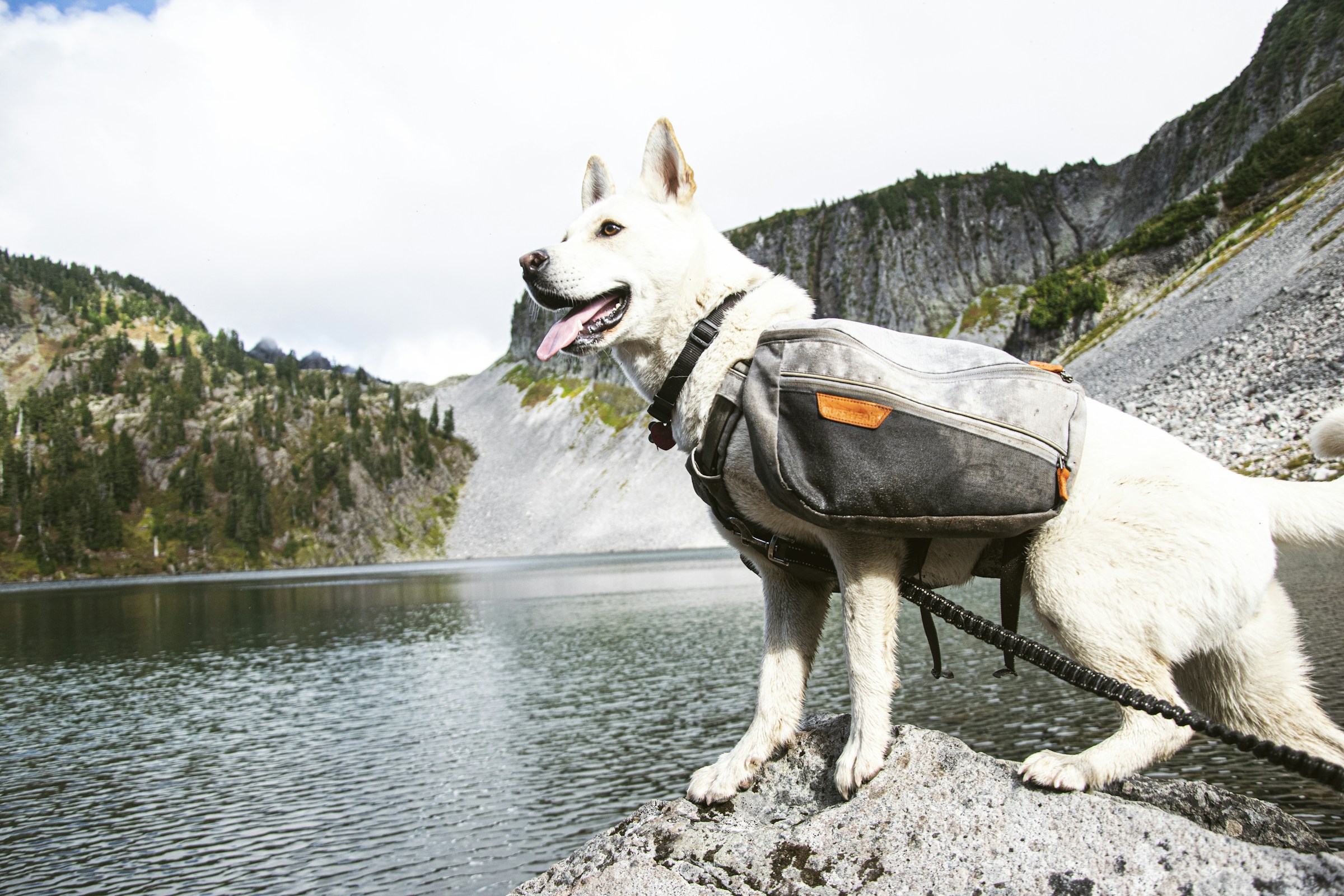
Pack for the cabin you booked, not the cabin in the photographs
A dog bed beside a fireplace makes a lovely listing photo. It does not tell you whether the bedroom is up an open staircase, the nearest emergency veterinarian is accepting patients overnight, or the “fenced yard” includes a gate your dog can squeeze beneath.
The most useful dog-friendly cabin packing list starts with those details. Bring your dog's familiar routine, then add what the property and surroundings require: traction for slippery floors, a way to block unsafe spaces, supplies for muddy paws, and a plan for storing food around wildlife.
This list is designed for a drive-to cabin vacation. Quantities should follow your actual itinerary, your dog's needs, and the possibility of travel delays—not a universal rule about how many bowls or blankets every dog needs.
Before packing: get six answers from the host
Send these questions through the booking platform so you can find the answers later:
- Where can the dog go? Confirm furniture, bedroom, deck, and hot-tub-area restrictions.
- Can the dog stay alone? Ask whether crating is required and whether any time limit applies.
- What separates the living and sleeping areas? Request stair photos, doorway widths, and details of open lofts or deck railings.
- What does “fenced” mean here? Ask about height, gaps, shared sections, gate latches, and direct access from the cabin.
- How are wildlife attractants stored? Confirm the designated indoor food-storage area, outdoor trash system, and any current local bear instructions.
- What dog supplies actually come with this reservation? A bowl in an old photograph is not a reliable packing plan.
Use our host question generator to organize the answers. The pet-friendly vacation rental checklist covers the wider booking checks.
If essential access depends on stairs your dog cannot manage, a gate will not solve the booking mismatch. Change the sleeping arrangement—or the property—before filling the car.
Category 1: food, water, and daily medication
Pack the routine first
Bring:
- Your dog's usual food, measured for every travel day and cabin day.
- A sensible reserve for delays, adjusted for how remote the property is.
- The normal scoop or measuring cup.
- Familiar treats, with enough for rewarding door manners and settling.
- Separate food and water bowls, plus a portable drinking bowl.
- Drinking water for the journey and arrival.
- Prescribed medication in its labeled packaging.
- Written dosing instructions and any necessary measuring device.
- A suitable cooler or other storage arrangement if the medicine requires one.
Keep medication accessible during the drive rather than buried beneath luggage. Ask your veterinarian how to handle temperature-sensitive medication and what to do if a dose is delayed; a cooler is useful only if it maintains the required conditions.
Avoid making vacation the moment you introduce a new food, unfamiliar supplement, or elaborate chew collection. Packing familiar items also makes it easier to notice when your dog is eating or behaving differently.
Make a feeding-and-storage plan
Use a closed container to contain kibble spills and keep packaging tidy. Retain the food label or a clear photograph of its identifying details.
A regular food bin is not a bear-resistant container. Neither is an ordinary cooler. Pet meals, treats, used bowls, and food rubbish belong in your wildlife-storage plan, not on the deck overnight. National Park Service guidance says bears treat anything with a scent as food, lists items such as trash, toiletries, and ice chests among those that must be stored properly, and notes that rules differ from park to park. It does not name pet food specifically, so treat these items as scented and ask the host. [1]
Ask where food should go at this particular cabin. Follow local rules and property instructions; do not assume that leaving it in the car is an acceptable alternative.
Feed in a manageable indoor spot, clean up crumbs, wash bowls, and put supplies away afterward. Pack a washable feeding mat if your dog tends to distribute dinner across the floor.
Category 2: identification, records, and an offline emergency folder
A cabin's Wi-Fi password is not an emergency communication plan. Save key information on your phone for offline access and carry a paper backup.
Pack or save:
- A collar with a readable identification tag and a reachable phone number.
- Your dog's microchip number, registry details, and registration contact information.
- A recent, clear photograph showing your dog's face and markings.
- Vaccination records and any documents required by the property or planned services.
- A medication list, including doses and relevant allergies.
- Your regular veterinarian's contact details.
- The cabin's full address and the host's arrival directions.
- Contact information and routes for nearby veterinary practices and an emergency hospital.
- Insurance or payment information you would need during treatment.
Check the microchip registration before leaving. A chip number in your phone is useful, but it cannot correct an outdated number in the registry. AVMA's travel brochure advises up-to-date identification tags, checking that your contact details in the microchip registry are current (your veterinarian can help), and packing a recent photograph, vaccination proof, and copies of relevant medical records. [2]
Call the emergency practice to confirm its current service arrangements. A map listing alone does not establish opening hours, overnight staffing, or whether you should phone before traveling.
Download the route while you have service. Include the host's instructions for the final approach; mountain driveways and similarly named roads can complicate an already stressful departure.
Category 3: leashes, barriers, and safer movement
Bring dependable everyday walking equipment
Pack:
- A well-fitting harness or collar your dog already wears comfortably.
- A familiar fixed-length leash.
- A spare leash and spare waste bags.
- A headlamp or flashlight, plus charging supplies or batteries.
- A visible collar light or reflective accessory for dark toilet trips.
- Your usual vehicle restraint or secured travel crate.
Check the rules for each park and trail rather than applying one leash-length rule to an entire state. An accommodation accepting dogs does not mean nearby trails do.
Keep a leash by the exit. The first toilet trip should not require searching the car while someone holds the cabin door open.
Match barriers to the actual opening
A portable gate or exercise pen can help separate a dog from an entrance, food preparation, or an unsuitable room. Confirm the opening dimensions and host permission first.
For stairs, do not assume an ordinary pressure-fit travel gate is safe at the top. Use only a barrier approved by its manufacturer for that position and installed as directed. If safe installation is impossible without prohibited alterations, keep the dog downstairs behind another secure boundary or choose different accommodation.
Bring washable nonslip runners if the host approves them and your dog struggles on smooth floors. Check that they stay flat and do not slide or become a trip hazard.
A deck is not a dog enclosure simply because it has railings. Keep your dog leashed until you have inspected gaps, steps, and exits. Our secure fenced-yard guide explains what to inspect beyond the fence height.
Category 4: sleeping, settling, and protecting rental furniture
The best comfort item is usually something your dog already recognizes.
Pack:
- A familiar bed or mat.
- A washable blanket.
- A crate, if your dog is already comfortable using it.
- A fitted or generously sized washable furniture cover, where furniture access is permitted.
- A waterproof underlayer if appropriate for your dog's needs.
- One or two familiar toys.
- A quiet enrichment activity that suits your dog and is easy to clean up.
A cover does not override a no-dogs-on-furniture rule. Nor does paying a pet fee automatically permit beds, sofas, or unattended stays.
Choose a sleeping spot away from the entrance and busy kitchen routes. Keep it close enough for your dog to settle without needing to follow everyone upstairs.
For a dog that chews bedding or swallows toy parts, do not introduce unfamiliar items and then leave. A cabin is also a poor place to try crating for the first time.
With two dogs, bring separate beds, bowls, and any barriers needed for peaceful meals. Plan around their usual relationship rather than assuming unfamiliar territory will make sharing easier. See our two-dog accommodation guide.
Category 5: mud, shedding, and the entrance cleanup station
A small cleanup station beside the door is more useful than a large cleaning bag left in the car.
Bring:
- Dog towels: one accessible for arrival, with another available while it dries.
- A washable entrance mat if the host permits it.
- A brush or comb appropriate for your dog's coat.
- Water and a cloth for cleaning paws.
- Waste bags and a way to carry filled bags to the designated bin.
- A lint roller or reusable hair-removal tool.
- A small supply of host-approved cleaning materials.
- Bags for transporting dirty laundry separately.
Ask before using stain removers on upholstery or floor finishes. Even a product labeled for pet mess can damage a particular material.
After wet walks, check paws, dry your dog, and hang towels where the host allows—not over wood furniture or directly against a heater.
If an accident happens, blot promptly, follow the property's cleaning instructions, and tell the host about anything requiring further treatment. Covering a wet patch with a blanket only postpones the problem.
Before checkout, collect waste from the yard and remove loose hair from the areas your dog used. Follow the actual checkout instructions rather than stripping bedding or starting laundry without being asked.
Category 6: a practical canine first-aid kit
First aid should help you respond while arranging veterinary care, not encourage improvised treatment at an isolated cabin. AVMA's travel brochure lists a first aid kit and the phone numbers of your veterinarian, a national poison control hotline, and a 24-hour emergency veterinary hospital at your destination. [2]
Discuss the contents with your veterinarian, especially if your dog has an existing condition. A useful starting list includes:
- Sterile gauze pads and a nonstick dressing.
- Bandage material your veterinarian has shown you how to use.
- Saline solution for cleansing wounds or flushing eyes (AVMA notes that contact-lens saline works for most purposes) [3].
- Blunt-ended scissors.
- Tweezers or an appropriate tick-removal tool.
- Disposable gloves.
- Clean towels.
- A small flashlight.
- A copy of your dog's medical record, including medications.
- Written emergency instructions.
- Any dog-specific supplies recommended by your veterinarian.
AVMA's first-aid brochure advises always contacting your veterinarian or poison control center before inducing vomiting. [10] Keep any product container available and ask the veterinarian before using items such as hydrogen peroxide or activated charcoal.
Save the ASPCA Animal Poison Control number: 888-426-4435. ASPCA says a consultation fee may apply. [11] AVMA also lists the Pet Poison Helpline at 855-764-7661, which may also charge. [10] If an exposure happens, keep the packaging or photograph the product label and call promptly; do not wait for symptoms to decide whether to ask for help.
Check the kit before each trip. Replace expired, damaged, or previously opened supplies as appropriate.
Category 7: tick prevention and the evening inspection
Pack your dog's veterinarian-recommended preventive, a tick-removal tool, and a light bright enough to examine the coat.
CDC recommends daily tick checks for pets that go outdoors and prompt removal of attached ticks. Its guidance highlights areas including the ears, eyelids, collar area, legs, toes, and tail. [4] CDC also notes that tick vaccines do not keep dogs from bringing ticks into your home, so keep checking even if your dog is vaccinated or on a preventive. [4]
Make the check part of coming indoors:
- Settle your dog somewhere well lit.
- Work systematically through the coat and check common hiding places.
- Remove any attached tick promptly using appropriate technique; ask your veterinarian if unsure.
- Check yourself and the clothing you wore outdoors.
- Note any bite and contact your veterinarian about concerning changes.
CDC notes that signs of tickborne disease may not appear for 7 to 21 days or longer after a tick bite. [4] Keep watching appetite and behavior after the holiday, not just while you are at the cabin.
Ask your veterinarian about destination-specific prevention before departure. Do not borrow another animal's product or assume a familiar product is appropriate for every pet.
Category 8: cold weather, wood stoves, and seasonal chemicals
Keep warmth separate from burn risk
For a cold-weather stay, consider a familiar coat, properly fitted boots your dog has practiced wearing, extra dry bedding, and towels for snow and wet paws.
Ask whether the cabin has a wood stove, fireplace, or portable heater, and whether an appropriate guard is supplied. Cornell's Riney Canine Health Center advises protecting dogs from heat sources by about three feet and not leaving them unsupervised near them, and notes that gates, exercise pens, or a fireplace screen can help maintain the distance. [5] Keep beds and blankets clear as well.
Ask the host about the appliance and its required clearances before relying on a pen or gate. If you cannot create a safe separation, leave the appliance unused.
Keep your dog away from ash containers. Cornell's veterinary college warns that fireplace and wood-stove ashes can burn pets if they contain live embers. [6]
Plan for ice melt and winterizing products
Bring water and a cloth to clean paws after walks. ASPCA warns that ice-melting chemicals can be dangerous if swallowed and recommends washing and drying paws and belly after winter walks. [7] Boots can provide coverage; Cornell's Riney center says good boots fit securely and provide traction, and suggests paw wax for dogs that resist them. [5]
Do not treat “pet-friendly” labeling as permission for your dog to eat a product.
Ask whether a recently reopened cabin has been fully de-winterized and whether chemicals, mothballs, or rodent bait are present. ASPCA's cabin-closing guidance says mothballs can cause stomach upset and, in some types, organ damage, and that pets must not have access to rodenticides; keep any packaging so a veterinarian knows the active ingredient. [8]
Keep toilet lids closed and block access to utility spaces until you have checked them. Pet Poison Helpline reports that some cabin owners put antifreeze in toilets to prevent freezing. [12] ASPCA says ethylene glycol antifreeze can taste sweet to pets and advises contacting a veterinarian or poison control immediately if ingestion is suspected. [9]
Load the car in three layers
Keep within reach: leash, waste bags, drinking water, bowl, scheduled medication, towels, records, and emergency contacts.
Carry in first: bed, barriers, flashlight, food-storage supplies, and the entrance cleanup kit.
Leave for later unloading: spare bedding, reserve food, and optional activity equipment.
On arrival, one person can supervise the leashed dog while another checks doors, floors, stairs, bins, accessible chemicals, and the agreed sleeping space. Solo travelers can keep the dog safely with them during this inspection.
This order means the dog has somewhere appropriate to settle before bags, groceries, and open doors turn arrival into a juggling exercise.
Packing mistakes worth avoiding
- Bringing gear instead of confirming access. A portable ramp may not fit the entrance; a gate may not fit the stairs.
- Relying on the advertised yard. Inspect it before unclipping the leash.
- Leaving scented supplies outside. Include treats, used bowls, and rubbish in your storage routine.
- Packing emergency numbers but no route. Save directions and confirm service arrangements.
- Using the holiday to trial everything new. Practice with boots, barriers, crates, and restraints at home.
- Forgetting the departure day. Reserve food, medication, bags, and an accessible towel for the journey back.
Turn this into your own list with our before-you-book checklist, removing anything irrelevant and adding your dog's specific needs. If you are still choosing a property, our Georgia cabins with fenced yards guide is a starting point for researching options—not a substitute for confirming a particular cabin's current setup.
The goal is not to take the entire house. It is to arrive with the few things that preserve your dog's routine, protect the rental, and let you respond sensibly when the setting is less straightforward than the listing suggested.
Questions people ask
How much dog food should I pack for a cabin vacation?+
Measure your dog's usual food for all travel and cabin days, then add a reserve appropriate to the property's remoteness and likely delays. Keep the normal measuring scoop and food identification details with it. Follow local wildlife-storage rules.
Should I bring a dog gate to a rental cabin?+
Possibly, but first confirm doorway dimensions, stair layout, and host permission. A portable gate is not automatically safe at the top of stairs. Use only a barrier approved for the position and installed as directed; otherwise arrange a different secure sleeping area.
Can I leave dog food on the cabin deck in a sealed bin?+
Do not assume a sealed household bin is bear-resistant. NPS says bear-resistant containers only work when closed and locked, and lists ice chests among items bears treat as food, so do not count a cooler as bear-proof. [[1]](https://www.nps.gov/articles/bearsafetyfood.htm) Store pet food, treats, used bowls, and waste according to the property's instructions and local wildlife rules.
Do I need furniture covers if the cabin charges a pet fee?+
A pet fee does not establish furniture permission. Confirm the rules first. Where dogs are allowed on furniture, a washable cover can help manage hair and damp paws, but it does not eliminate responsibility for damage.
What should I do if my dog may have swallowed antifreeze?+
Contact a veterinarian, emergency veterinary hospital, or ASPCA Animal Poison Control at 888-426-4435 immediately. ASPCA's antifreeze guidance says to get the dog to a veterinary hospital right away, as signs can be missed early. [[9]](https://www.aspca.org/news/digging-deeper-getting-facts-dangers-antifreeze-and-your-pets) Do not induce vomiting unless a veterinary professional directs you. Keep the product label available if possible; a consultation fee may apply.
Sources and how we researched this
Before writing, we reviewed 6 of the pages that currently rank for this topic, noted what they leave out, and checked facts against the official sources below. We haven't stayed at or inspected any property for this guide. Read our editorial standards.
- Bear Safety: Storing Food (National Park Service, accessed 2026-11-16)
- Traveling With Your Pet (American Veterinary Medical Association, accessed 2026-11-16)
- First aid tips for pet owners (American Veterinary Medical Association, accessed 2026-11-16)
- Preventing Ticks on Pets (Centers for Disease Control and Prevention, accessed 2026-11-16)
- Winter Safety - January 2026 (Cornell Richard P. Riney Canine Health Center, accessed 2026-11-16)
- CVM cold-weather tips for pet owners (Cornell University College of Veterinary Medicine, accessed 2026-11-16)
- Cold Weather Safety Tips (ASPCA, accessed 2026-11-16)
- Pet Safety Tips for Closing Down the RV and Cabin for the Season (ASPCA Animal Poison Control Center, accessed 2026-11-16)
- Digging Deeper: Getting the Facts on the Dangers of Antifreeze and Your Pets (ASPCA Animal Poison Control Center, accessed 2026-11-16)
- Pet First Aid (brochure with first aid kit checklist) (American Veterinary Medical Association, accessed 2026-11-16)
- ASPCA Poison Control (ASPCA, accessed 2026-11-16)
- Antifreeze Poisoning in Dogs & Cats (Ethylene Glycol Poisoning) (Pet Poison Helpline, accessed 2026-11-16)
Keep reading

Destination
Dog-Friendly Cabins With Fenced Yards in Georgia
A mountain view is easy to judge from a photograph. A yard that works for your dog takes a few better questions.
12 min read · Reviewed 2026-11-16
Checklist
What to Check Before Booking a Pet-Friendly Vacation Rental
A practical booking audit for the dogs you have, the trip you want, and the rules you can actually follow.
13 min read · Reviewed 2026-11-16
Planning
How to Find a Vacation Rental With a Truly Secure Fenced Yard
Look past the lawn photo: check the weakest boundary, the gate routine, and the evidence that matters for your dog.
11 min read · Reviewed 2026-11-16