Planning guide
How to Find a Vacation Rental With a Truly Secure Fenced Yard
Look past the lawn photo: check the weakest boundary, the gate routine, and the evidence that matters for your dog.
By Paws & Passage Editors · Last reviewed 2026-11-16 · 11 min read
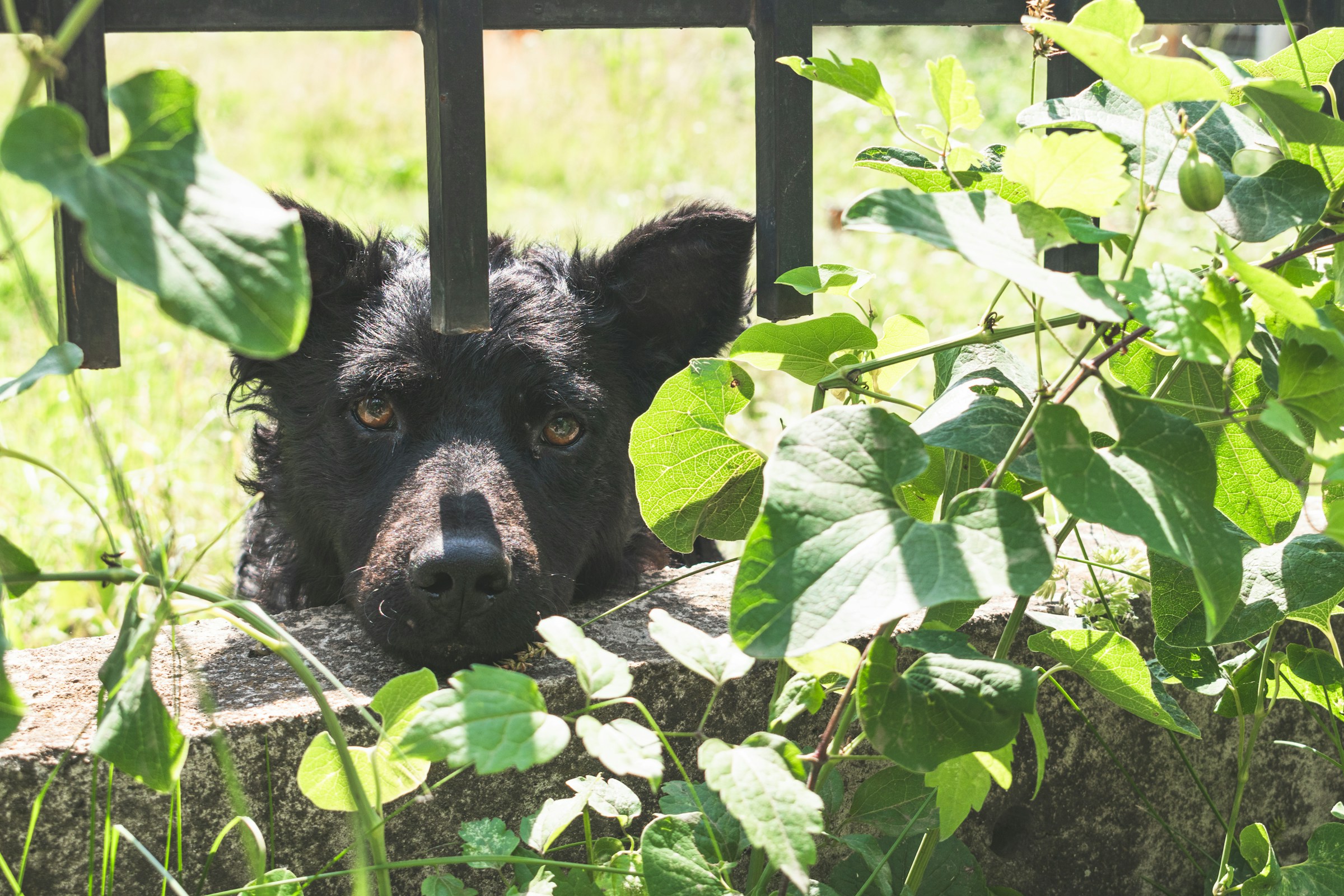
A fenced yard can make a rental much easier to live in. It can also be a three-sided lawn with an open driveway, a low decorative gate, or a shared space where someone else's dog appears without warning. The useful question isn't “Does it have a fence?” It's “What exactly closes this space, and will that arrangement work for my dog?”
You cannot establish that from a lawn photograph. Before paying, ask for the complete boundary, the weakest measurements, and a clear explanation of who opens each gate. Then check it again on arrival. Even a well-chosen yard calls for supervision; no listing description makes a dog escape-proof.
Start with your dog, not a universal fence height
Write a short containment profile before searching. Include your dog's size, known escape behavior, reactions to wildlife or passing dogs, and anything that changes in unfamiliar places. A dog who stays beside you at home may still need careful management at a strange house.
The American Kennel Club's fence guidance says a dog's habits and activity level help determine the right fence, and that dogs who chase wildlife need height and strength. It also lists looks, privacy, and budget among the considerations. Its escape-prevention advice considers jumping, climbing, and digging as different problems. [1] [2]
For booking purposes, translate that into specific questions:
| Your dog's pattern | What to investigate | What should pause the booking |
|---|---|---|
| Jumps or launches from objects | Lowest usable fence height; furniture, logs, slopes, and retaining walls nearby | A tall fence photographed only from its downhill side |
| Climbs | Mesh, horizontal rails, trellis, and corner footholds | “Six feet” with no information about construction |
| Digs | Ground contact, soft soil, old holes, and existing buried protection | A gap concealed by mulch or loose stones |
| Squeezes through openings | Gate bottoms, picket spacing, mesh openings, and building junctions | No measurements of the widest openings |
| Rushes gates | Latch operation, visitor access, and a separate enclosed dog area | A single driveway gate used throughout the day |
| Reacts to outside movement | Sightlines, neighboring dogs, footpaths, and livestock | A shared or see-through boundary beside constant traffic |
These are screening questions, not engineering specifications. There is no single fence height or gap measurement that this article can certify as safe for every dog. Use your dog's known abilities, and reject a setup that relies on hoping they won't try.
For two dogs, assess the more capable escape artist and the smaller opening-seeker separately. Our two-dog accommodation guide covers the booking side of that problem.
Decode the listing before you contact the host
Read the full description, amenities, rules, captions, and recent dog-owner reviews. Search the page for “fence,” “gate,” “shared,” “driveway,” “pool,” and “unattended.” Treat apparent contradictions as questions to resolve, not details to average together.
The wording traps
“Partially fenced” means some portion is not enclosed. Unless there is a separate, fully enclosed area shown clearly, plan for leash-only use.
“Fenced property” may describe the outer acreage, not a dog-accessible yard. “Enclosed patio” may mean a small paved space rather than grass. “Gated community” describes an entrance to a neighborhood, not containment beside the rental. “Private yard” can describe exclusive use without saying anything about fencing.
“Natural boundary” may be a hedge, vegetation, or a change in terrain. Ask whether a physical barrier continues behind it. “Dog run” may mean a separate small enclosure; request its dimensions, surface, shade, and access route. “Secure” is an opinion until the construction and management details are supplied.
A screened porch or deck gate needs its own evaluation. Screens are not the same construction as a dog-containment fence, and a deck can have openings or drops that a garden photograph doesn't reveal. Do not silently substitute one amenity for another.
Check that the boundary forms a continuous loop
Ask the host to describe a complete circuit from the door your dog will use, around the yard, and back to that door. Every section should be identified: fence, wall, building, and gate. Where two materials meet is as important as the long, tidy stretch in the hero photo.
Check corners, the ends of hedges, gaps beside sheds, spaces underneath steps, and fence-to-house joins. Confirm whether there are drainage openings or access points behind planting. Ask whether the fence surrounds the actual rental yard or a larger area that includes parking, another unit, or a public route.
A house can form part of the boundary, but doors become access points. Ask which doors open into the dog area and who uses them. If reaching the yard requires crossing an unfenced driveway, that is a leashed transfer, not direct enclosed access.
Map the route in simple terms: kitchen door → enclosed patio → latched gate → lawn. If the answer instead includes crossing a common path or walking around the building, record that difference. It may still be a perfectly useful rental; it simply isn't the effortless back-door arrangement you may be paying for.
Measure the weakest section, not the average
Request the minimum fence height measured from the dog's side, especially where the ground rises. A fence can be taller in the listing than it is from a raised bed beside it. Ask for a picture with a tape measure at the low point rather than estimating against a chair.
For a climber, ask about both faces of the fence. A smooth-looking exterior may have rails on the inside. Look for stacked firewood, benches, bins, grills, retaining walls, and planters that create a possible launch point. Do not assume you can move heavy furniture after check-in; discuss any adjustment before booking.
For a digger, look along the bottom edge rather than only at the fence panels. Ask about soil washout, old tunnels, loose wire, and gaps under landscaping. If the property has existing dig protection, request its description and current condition. A photograph cannot establish that concealed reinforcement is continuous.
Do not install stakes, attach mesh, move stones, or alter a rented fence without permission. A portable pen is not an automatic substitute for a suitable boundary either. Its appropriateness depends on the dog, construction, surface, weather, and supervision.
Give gates their own inspection
A fence can be excellent while its gate is the escape route. Ask for the maximum gap beneath the gate, including the hinge and latch ends, and the opening between its edges and posts. Sloping ground can create very different gaps across the same gate.
Ask how the latch works
A gravity latch drops into place; a bolt must be slid into position; a self-latching mechanism catches when the gate closes. These descriptions tell you how a gate is meant to work, not whether it currently works. Ask whether the gate closes cleanly, needs lifting, drags on the ground, or can be pushed open after appearing shut.
Request a short video showing it being opened, closed, and gently checked from inside the yard. If there is a secondary clip or lock, ask whether guests may use it and who else needs access. Never add a lock that obstructs emergency access or locks out an authorized user without an agreed plan.
The cleaner-and-driveway problem
Ask who uses the gate: cleaners, landscapers, pool staff, delivery drivers, the host, or another household. A gate closed for arrival photos may remain open while supplies are unloaded.
Useful questions include:
- Is the driveway inside the fenced dog area?
- Will any service visits happen during our stay?
- How will we be notified before someone opens a gate?
- Can the dog be kept indoors during those visits?
- Is there a separate pedestrian gate and a separate enclosed dog space?
- Who checks that all gates are latched after turnover?
For your own arrivals, keep the dog secured while people move luggage and vehicles. Agree on one person to handle the dog and another to manage doors. Do not turn unloading into the first test of the property's gate routine.
Shared yards need a different plan
“Shared” can mean a common lawn, a courtyard serving several units, or a private-looking garden that the owner crosses to reach storage. Ask who has access and whether other dogs use the space at the same time. Exclusive use of the home does not answer that question.
If separation from unfamiliar dogs matters, require written clarity about sole use and access. An informal promise that other guests “usually don't come outside” is not a reliable schedule. A physical boundary between individual yards may still allow close fence-line encounters.
Also ask what lies immediately outside: a walking path, neighboring kennel, road, beach entrance, or livestock field. A fence can contain a dog while leaving them exposed to triggers all day. For a dog who needs visual separation, the privacy of the boundary may matter as much as its height.
Invisible and electric fences are not a physical enclosure
If the host says “invisible,” “wireless,” “GPS,” or “electric,” ask exactly what they mean. A buried-wire or GPS boundary typically relies on a compatible collar and a learned boundary. Electrified livestock fencing is a different installation again. None should be mistaken for a continuous physical dog fence.
For a short rental stay, our booking standard is simple: if your plan requires a physical enclosure, a virtual boundary does not satisfy it. Do not assume your dog understands a new system or that outside dogs and wildlife are excluded. VCA Animal Hospitals notes that such a fence relies on the dog learning where the boundary is, can fail if something like a collar battery dies, and does not stop stray dogs or wild animals from entering the yard. [4] A rental's specific equipment and condition still need checking.
You may still choose such a home for supervised, leashed outdoor time. Record it honestly in your shortlist rather than treating the system as a bonus physical barrier.
A fenced pool yard is not necessarily a safe dog yard
A fence around the property can keep a dog inside the same space as an accessible swimming pool. Ask for a layout showing whether a separate barrier stands between the dog-accessible area and the water. Include hot tubs, ponds, and other water features in the question.
CPSC recommends layers of pool protection, including barriers and self-closing, self-latching gates, to prevent unsupervised access by young children. That guidance concerns child drowning prevention; it is not a dog-containment certification or proof of legal compliance at a particular rental. [3]
Our dog-travel screening question is narrower: can the dog reach the water from the area you plan to use? Ask about barrier openings, gates, and any route through the house. Don't count a pool cover as a dog exercise surface or assume a dog will know how to exit an unfamiliar pool. If separation is unclear, choose a different yard or plan leashed access away from the water.
Request a small evidence pack before paying
Send one organized request rather than a dozen scattered messages. Save the response with the exact listing, travel dates, and the date the evidence was supplied.
- A simple sketch marking the entire enclosed area and every gate.
- Recent wide photographs of all boundary sections.
- Close-ups of fence-to-building joins and the ground line.
- Tape-measure photos of minimum height and maximum openings.
- Both sides of gates, including latch and hinge areas.
- A short continuous perimeter video, plus the gate closing.
- Confirmation of sole or shared use and scheduled service access.
- A layout showing separation from pools, roads, and parking.
- Written disclosure of damage, repairs, or changes since the photos.
Use our host-question builder to organize the request. Suggested wording: “We are considering these dates with one dog who digs and squeezes under gates. Could you confirm the complete enclosed area, minimum fence height, largest ground-level openings, gate latch arrangements, and anyone else's access? Recent perimeter photos and a gate-closing video would help us decide.”
Do not ask the host to guarantee the impossible. Ask for observable facts, then make the suitability decision yourself.
Make a decision without false precision
| Evidence | Booking decision | Why |
|---|---|---|
| Current photos and answers show a suitable continuous boundary | Keep on shortlist; inspect on arrival | Good evidence still isn't a permanent guarantee |
| A manageable limitation is disclosed | Book only with a realistic leash or access plan | The trip must work without off-leash use |
| Gate gaps, shared access, or pool separation remain unclear | Pause and request specifics | Unknown is not the same as acceptable |
| Boundary conflicts with your dog's known abilities | Reject for off-leash use | More enthusiastic wording won't fix the mismatch |
Put comparable facts into the rental comparison tool, not a numerical “safety score.” A lower nightly price may require paid dog care or a different itinerary; use the cost calculator to compare the real trip budget. The complete pre-booking checklist covers the rules and costs that fencing cannot answer.
Walk the perimeter before unclipping the leash
On arrival, secure the dog with a responsible adult or safely indoors while another adult checks the yard. Keep them leashed for any initial inspection with you. Walk every boundary, close and check each gate, and compare the condition with the supplied evidence.
Look for storm damage, newly opened holes, loose boards, sharp edges, discarded food, and unfamiliar yard treatments. Ask about anything you cannot identify rather than allowing access while investigating. Recheck after maintenance visits or severe weather, and whenever something about the gate routine changes.
If the yard does not match the description, photograph the issue and contact the host through the booking channel promptly. Keep the dog away from the problem. Ask for a safe resolution, but do not assume an immediate repair or refund is guaranteed. Your backup needs to work that evening: leashed toilet breaks, another suitable exercise location, or alternative accommodation if the stay cannot work safely.
Save your arrival checks in the travel checklist. The best outcome is not a fence you never think about again. It is a yard whose limits you understand, with gates managed consistently and a dog you continue to supervise.
Questions people ask
What fence height is safe for a vacation rental with a dog?+
There is no universal safe height. Check the lowest point from the dog’s side, construction, footholds, nearby objects, and your dog’s jumping or climbing history. A tall fence alone is not enough.
Does partially fenced mean my dog can go off leash?+
No. Treat the space as unenclosed unless the host documents a separate continuous physical enclosure suitable for your dog. Plan leashed access if any boundary remains open.
Which yard photos should I request?+
Ask for every boundary section, ground-level gaps, building joins, gate bottoms and latches, minimum-height measurements, and a layout showing pools and shared access. Request recent images and a short gate-closing video.
Is an invisible fence enough for a short rental stay?+
Do not count it as a physical enclosure. Such systems rely on a learned boundary and working equipment, and they do not stop other animals from entering. If your trip requires physical fencing, choose that explicitly.
What if the fence is damaged when I arrive?+
Keep the dog away from the defect, document it, and contact the host through the booking channel. Use a leashed backup plan while seeking a resolution; repairs and refunds are not automatic.
Sources and how we researched this
Before writing, we reviewed 5 of the pages that currently rank for this topic, noted what they leave out, and checked facts against the official sources below. We haven't stayed at or inspected any property for this guide. Read our editorial standards.
- What Type of Dog Fence Should I Have? (American Kennel Club, accessed 2026-11-16)
- How to Help Prevent Your Dog From Escaping the Yard (American Kennel Club, accessed 2026-11-16)
- In-Home Drowning: Layers of Protection (U.S. Consumer Product Safety Commission, accessed 2026-11-16)
- The Pros and Cons of Invisible Fences for Dogs (VCA Animal Hospitals, accessed 2026-11-16)
Keep reading
Checklist
What to Check Before Booking a Pet-Friendly Vacation Rental
A practical booking audit for the dogs you have, the trip you want, and the rules you can actually follow.
13 min read · Reviewed 2026-11-16
Planning
Traveling With Two Dogs: The Accommodation Planning Guide
Book for two individual dogs—not just a listing that happens to allow pets.
11 min read · Reviewed 2026-11-16
Destination
Dog-Friendly Cabins With Fenced Yards in Georgia
A mountain view is easy to judge from a photograph. A yard that works for your dog takes a few better questions.
12 min read · Reviewed 2026-11-16