Gear guide
Dog ID Tags, Microchips and GPS Trackers for Travel
Layer a tag, a registered microchip and, if it suits your trip, a tracker, then know exactly what to do in the first hour if your dog slips away in a place you do not know.
By Paws & Passage Editors · Last reviewed 2026-11-16 · 14 min read
Why travel changes the lost-dog problem
At home, a dog that slips out of the yard is usually in familiar territory, near neighbors who know the dog and a vet who has the records. On a trip, almost none of that is true. The streets are unfamiliar, the smells are new, the dog may be tired or startled, and you do not know the nearest shelter, the local animal control number or which neighborhood group to post in.
That is why identification deserves more thought on the road than it gets in daily life. A dog that is easy to identify, and whose contact details are current, is easier to return to you wherever you happen to be.
This guide covers three layers of findability and how they fit together:
- A visible ID tag that anyone can read on the spot.
- A microchip with a registration record that works even if the collar is gone.
- A GPS or Bluetooth tracker that can help you work out where to look.
It then gives a lost-dog plan for an unfamiliar place, and a pick-by-situation section for gear. No gear can promise a dog will not get lost. What the layers do is shorten the time between "gone" and "found," and none of them replaces watching the dog, a secure leash or harness, and a secure rental.
Related reading: our pet-friendly rental checklist covers the rental itself, and the secure fenced yard guide covers the most common escape route. You can add ID tasks to the trip checklist.
Layer one: the visible ID tag
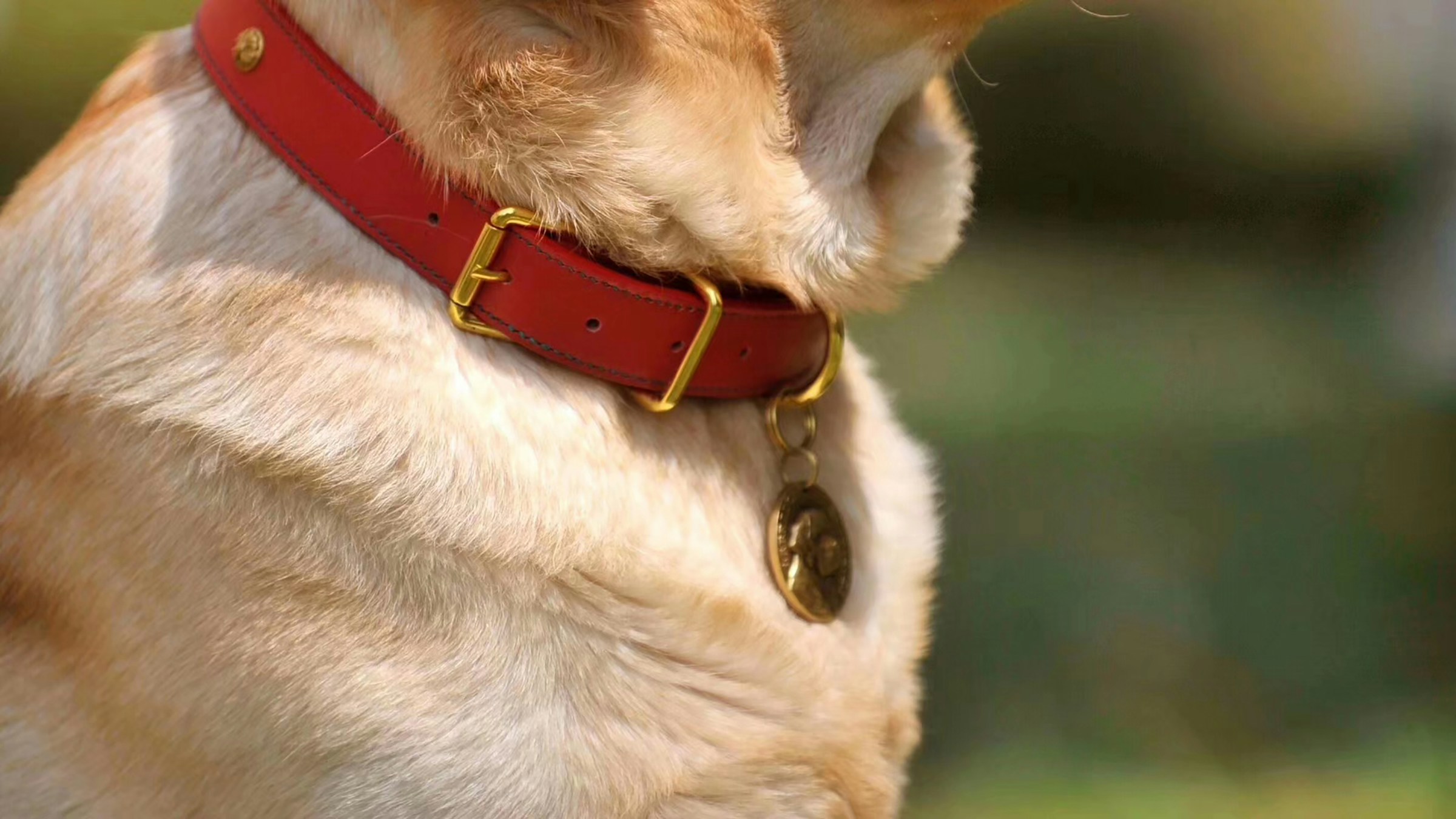
A tag is the fastest layer because it needs no equipment. A person who finds your dog can read it and call you.
The ASPCA advises that pets wear a collar with an ID tag listing the owner's name, current phone number and other contact details, and says this applies even to indoor-only pets. [1] AKC Reunite makes the same practical point from the other side: a visible collar tag means a Good Samaritan can help immediately, with no trip to a veterinary clinic and no wait for Animal Control to scan for a microchip. [6]
What a travel tag should say
Think about who will read it: a stranger, possibly in a hurry, possibly far from your home.
- A phone number that will be answered while you travel. A mobile number beats a landline you cannot pick up.
- A second contact. The ASPCA's flyer advice lists your name and two phone numbers, with one for a friend or relative. The same logic works on a tag or in your records. [1]
- Short and legible. Collars break and tags can fall off or become hard to read, as AKC Reunite notes. [2] Deep engraving and a tag that is not scratched flat matter more than extra words.
Keep the tag attached
The usual failure is a tag that detaches. Check the ring and the connection before every trip, or choose a collar with the details built into a nameplate. If your dog's tags jingle against a rabies tag, a tag silencer can help; AKC Reunite lists a glow-in-the-dark plastic one for its own tag. [6] A loose collar can also slip over a dog's head, so for a dog that backs out of collars, walk in new places on a fitted harness and keep a spare tag in the car.
Layer two: the microchip and its registration
A microchip is a permanent form of ID, but it does a narrower job than many owners assume.
What a microchip is
AKC Reunite describes a microchip as a grain-sized capsule that a veterinarian implants under the skin between a dog's or cat's shoulder blades. It has no power source, so it is not a GPS and not an online directory. A small passive antenna is activated when a scanner passes over it, and the scanner reads an ID number. [2]
The same page makes a point many owners miss: a microchip ID number does not do much on its own, and it is similar to a blank collar tag. The number has to be registered with your contact information. [2]
What a microchip does not do
- It does not locate your dog. AKC Reunite's travel page calls a microchip not a tracking device but a unique ID number. [4]
- It does not help until someone scans it. Veterinarians and shelters have scanners. A person who finds your dog may not know the dog is chipped unless they take the dog to one of those scanners, or the dog is wearing a tag that says so. (That last point is our own reasoning, not a statement from the sources below.)
- It does not show your details by itself. AKC Reunite says only the microchip ID number appears when it is scanned, and then the registry is contacted to get the enrollment information linked to that number. [4]
Registration: the part that goes wrong
The ASPCA says a microchip is only as good as the information provided to the chip's company, and tells owners to update the registration after moving or changing phone numbers. [1]
Before a trip, spend ten minutes on this:
- Find the number. Your vet's records, the adoption paperwork or the chip's registration email usually show it.
- Find the registry. If you are not sure which company holds the record, a vet can scan the chip and tell you the number to call.
- Check what is on file. Confirm that the phone number, the email and any alternate contact are current.
- Add an alternate contact. AKC Reunite recommends at least one alternate contact who lives outside your immediate area, in case a disaster knocks out phones or internet where you live. [5] For travel, an alternate who is home and reachable is just as useful.
- Save the registry's number in your phone. You may need to call them yourself, not wait to be called.
AKC Reunite's travel page says explicitly that, especially when traveling, you should verify that your pet's enrollment information is up to date. [4]
The universal lookup and what it cannot do
There is more than one pet recovery registry in the United States, and a chip may be registered with one you have forgotten. The AKC Reunite FAQ carries a statement from the American Animal Hospital Association (AAHA) describing its Universal Microchip Lookup Tool. It says the tool lets veterinarians, humane organizations, pet owners and others search participating pet recovery registries to identify which ones have a particular microchip registered. AAHA says it does not maintain a database of microchips and only links to registries, and that the tool searches only companies that choose to participate. [5]
In practice: use a lookup to learn where the chip is registered, then contact that registry to check or change the record. A lookup is not the registry.
Registration is not ownership
AKC Reunite notes that enrollment helps the safe return of a pet but does not signify ownership. [5] Keep your own records: vet paperwork, a few clear photos of your dog, and the chip number.
A note on sources
AKC Reunite is a registry that sells enrollment and collar tags, so read its pages with that in mind. It says it enrolls all brands of microchips. [2] The facts used here are mechanical ones about how chips and records work, and the ASPCA's guidance points the same way.
Layer three: GPS and Bluetooth trackers
A tracker is the only layer that can show you where your dog is. It is also the layer with the most trade-offs, so it helps to separate the two common types.
Cellular GPS trackers
These carry a GPS receiver, a battery and a cellular connection, and send location to an app on your phone. Tractive's page puts it plainly: the tracker has a built-in SIM, like a phone, that uses mobile networks to send location, and the fees for that are covered by a subscription. [7] Fi's app page says GPS and LTE track your pet's location and send live updates through the app. [9]
What that means in practice:
- A subscription is part of the deal. Check the maker's current terms before you buy, because plans and what they include change.
- Coverage matters. Tractive says its trackers connect where there is 2G and/or LTE (CatM1) cellular coverage from one of its 500+ partners, in 175+ countries. [7] If your route crosses patchy coverage, such as a remote trailhead or a campground, a cellular tracker may be quiet exactly when you need it. Look up the maker's coverage tool for the places you are going.
- Battery is a real limit. The batteries on the two makers' pages range from days to months, and the figures depend on settings. Tractive lists up to 6 days for the DOG 6 without Power Saving Zones and up to 2 weeks with them. [7] Fi lists up to 3 months. [8] A tracker that is not charged finds nothing.
- Size and fit. Tractive lists the DOG 6 for dogs above 8.8 lbs and the DOG 6 XL for dogs above 44.1 lbs. [7] A tracker that does not fit your dog or collar will be left at home.
- It must stay on. A clip-on tracker that falls off is no help. Check the attachment each day, and think about wearing it on a harness.
Bluetooth item trackers
A Bluetooth tag works differently. Apple's page describes AirTag as sending a secure Bluetooth signal that nearby devices in the Find My network can detect, which then send the location to iCloud so you can see it on a map. [10] That design is meant for objects. Apple's page describes keys, bags and similar items and does not describe pet use, so check how any Bluetooth tag's maker treats pets before using it on a collar.
The key difference is that it depends on other people's devices being close. Where there are lots of phones, that can help. On a trail, in a field, or at night in a quiet area, there may be none. Treat a Bluetooth tag as a weaker aid than a cellular GPS tracker, and not as a substitute for either a tag or a registered chip. A tracker with a battery is also a device that can fail, run flat or be lost.
What no tracker does
A tracker shows a location. It does not retrieve the dog, and a dog that is moving, frightened or in a car may not be where the map says by the time you arrive. A tracker is a tool for the search plan below, not a replacement for it. And it is no substitute for a visible tag and a current microchip record: if someone else finds your dog, the tag and the chip are how they reach you.
How we choose and how this site earns money
The picks below are chosen from criteria and from specifications on each maker's own product page. Paws & Passage has not tested, used or reviewed any of these products, and nothing here is a performance claim. The criteria are: a product the maker currently lists, a clearly stated size or weight range, a clearly stated power source and battery life where there is one, a plain statement of any subscription and coverage requirement, and fit for the situation described. Where a page does not say something, such as Fi's coverage area, we say so instead of guessing.
Paws & Passage may earn a commission if you buy through an affiliate link on this site. No such links are active in this guide at the time of writing, and a commission never changes which products are listed. See our affiliate disclosure for the details.
Pick by situation
| Your situation | What to look at first |
|---|---|
| A short road trip with a dog that stays on leash | A current tag and a checked microchip record. A tracker is optional. |
| A rental with a yard, or a dog that escapes | A clip-on or collar GPS tracker, plus the rental checks in our secure fenced yard guide. |
| A large dog | A large-dog-sized tracker, plus the points in our large-dog rental guide. |
| A small dog | Check weight and size limits first. Some trackers are listed for dogs above a minimum weight. |
| Two or more dogs | A tag per dog, a record per dog, and a tracker and plan per dog if you choose to track. See our two-dog planning guide. |
| Camping or remote areas | Coverage first. A cellular tracker needs cellular coverage, so check the maker's coverage tool for the route. |
| A trip abroad | Check your destination's rules and the maker's coverage list. AKC Reunite says a microchip is required to travel outside the US or to Hawaii, and that the pet must be microchipped before the health certificate process begins. [4] |
Notes on the picks
The two AKC Reunite items put the ID number and a helpline where a finder can read it, which is what the first layer is for. [6] They are tied to an AKC Reunite record, so they suit owners who register with that service; any durable, legible tag with a mobile number does the visible job. Tractive appears because its page states weight ranges, collar widths, battery figures, connectivity and the subscription requirement plainly. [7] Fi's collar page lists a long battery life in a collar-style design, [8] but it does not state carrier, coverage or subscription terms, and Fi's membership page describes the collar as part of a membership, so confirm both with Fi before you buy. [11]
If your dog goes missing in an unfamiliar place
Speed matters, and so does a calm, repeatable routine. This plan draws on the ASPCA's and AKC Reunite's guidance.
The first hour
- Start searching immediately, close to where the dog was last seen. AKC Reunite advises beginning right away within a 2 mile radius of where your pet was last seen, before the pet has time to roam too far. [3]
- Bring help and bring something familiar. Gather the people you are traveling with, neighbors or hosts. AKC Reunite suggests bringing a favorite treat or toy and calling out words your pet responds to, along with the dog's name. [3]
- Look in hiding places first. The ASPCA recommends checking hiding spots, and if the pet is not nearby, walking or driving the area with a recent photo and asking people to check sheds and garages. [1]
- Check your tracker, if you have one. Open the app, look at the live location and last update, and use any light or sound feature the maker provides.
- Tell your host or the property manager. They know the area and may know neighbors.
The first day
- Call your microchip registry. AKC Reunite tells owners to notify its helpline so it can confirm your contact information is current. [3] Whichever registry holds your dog's record, report the dog missing and check that your phone number is right.
- Call local animal control, vets and shelters. The ASPCA's list is animal control, veterinary hospitals, municipal and private shelters and local rescue groups, since one may already have the pet. If no shelter is nearby, it says to contact the police. [1] Remember that where you are staying may be served by a different shelter from the one you would expect, so ask your host which agency covers the area.
- Visit shelters in person, with a photo. The ASPCA recommends visiting shelters in person daily, and AKC Reunite notes that staff can change from day to day. [1] [3]
- Make a flyer. The ASPCA recommends one consistent design with a bold headline, a recent clear photo, breed, sex, coloring, age, weight, distinguishing features and when and where the pet was last seen, with your name and two phone numbers, including a friend or relative's. [1] Prepare a version now with your mobile number so you are not designing one in a panic.
- Put it where people look. The ASPCA suggests dog parks, pet stores, grooming shops, vet offices and busy businesses, and lampposts and trees near where the pet was lost. [1]
- Use local networks. The ASPCA suggests emailing contacts, posting on social media and contacting the administrators of local lost-pet groups. [1] In a place you are visiting, ask the host which local groups are active.
If someone finds your dog
Someone who finds a dog may call the number on the tag, or take it to a vet or shelter for a scan. AKC Reunite says that when an enrolled pet is found, it calls, texts and emails each primary and alternate contact on the record. [5] That is why current contact details and an alternate contact matter. Keep your phone on and watch for calls from numbers you do not know.
Do not give up
The ASPCA notes that many lost animals find their way home. [1] If you are separated during an emergency, AKC Reunite advises getting your family to a safe location before you search. [3] When you are reunited, check your dog for injuries and call your veterinarian if there are signs of illness, then tell any registry or group you contacted that your dog is back.
A pre-trip routine that takes twenty minutes
- Tag is legible, attached securely and shows a mobile number.
- Microchip number is saved in your phone and on paper.
- Registry record checked, with current phone, email and an alternate contact.
- Tracker charged, subscription active and coverage checked for your route, if you use one.
- Tracker attachment checked, and the app set up on every adult's phone.
- Recent clear photos of your dog saved offline, including any distinguishing marks.
- A ready-to-print flyer saved to your phone.
- Local animal control and shelter numbers saved once you arrive.
- Rental escape routes checked: gates, doors, fence gaps. See the rental checklist.
If you are packing for a cabin or rural stay, our cabin packing list pairs well with this routine. Add the ID tasks to your trip checklist so they are not left to the morning of departure.
Common mistakes
The usual errors are treating the chip as a tracker, registering once and never checking, buying a tracker and skipping the tag, ignoring cellular coverage, and forgetting a second contact. Write the plan down and share it with everyone traveling with you.
Our picks
We haven't tested these products. They were chosen against the criteria above using the maker's published specifications and independent standards, which are linked for each one.
Putting readable contact details on any dog's existing collar
AKC Reunite AKC Reunite Premium Stainless Steel Collar Tag
A visible collar tag that carries the pet's name, an AKC Reunite ID number and the service's 24/7 helpline number, so a finder can act without a scan.
It is the visible first layer: a finder can read an ID number and a helpline on the spot, and the maker lists a stainless steel build and an 18-month warranty.
- Maker says the personalized tag includes the pet's name, ID number and AKC Reunite's 800 number
- Sold in a large size (1.25 inch diameter) and a small size (7/8 inch diameter), or engraved in a round 1-inch diameter style
- Includes a 0.8 inch stainless steel collar or key ring attachment
- Maker says it will not break or rust and lists an 18-month warranty
- Optional add-ons listed: a Quick Scan QR code (not available with the engraved or aluminum tags) and a glow-in-the-dark tag silencer
- The ID number on the tag points to an AKC Reunite record, so the tag only helps if that record's contact details are current
Check before you buy
- It points to an AKC Reunite record, so it is most useful if you are enrolled and keep the record current.
- The tag is only helpful if it stays attached and legible, so check the ring and the collar before each trip.
- Check the maker's page for current options, which can change.
Specs from Pet ID Tags | AKC Reunite (AKC Reunite, accessed 2026-11-16). Sizes, models and availability change: confirm on the seller's page.
Owners who want ID built into the collar so there is no separate tag to lose
AKC Reunite AKC Reunite Reflective Personalized Dog Collar
A buckle collar with a built-in personalized nameplate, so the ID information cannot jingle off a separate tag ring.
The nameplate carries the dog's name, ID number and AKC Reunite's contact details, and the maker lists reflective stitching for walks near roads.
- Maker lists extra small, small, medium and large sizes; the large collar is listed at 18 to 28 inches long and 1 inch wide
- Stainless steel, polymer-coated nameplate with the pet's name (up to 12 characters), the AKC Reunite ID number, and the toll-free number and URL
- 3M Scotchlite reflective stitching that the maker says is visible to approaching motorists from up to 600 feet away
- Plastic buckles, built-in adjustment slides and a triple nickel-plated D ring
- Seven colors listed; maker states a 6-month guarantee
- Optional QR code add-on listed; maker says the collar is not recommended for cats
Check before you buy
- Available in extra small to large, so check the length and width against your dog's neck.
- Plastic buckles and a 6-month guarantee, as the maker states; a dog that slips collars may do better on a fitted harness.
- Like the tag, it relies on an AKC Reunite record being current.
Specs from Pet ID Tags | AKC Reunite (AKC Reunite, accessed 2026-11-16). Sizes, models and availability change: confirm on the seller's page.
Small to medium dogs above 8.8 lbs when you want a cellular GPS tracker on the existing collar
Tractive Tractive DOG 6
A clip-on GPS tracker for dogs that uses a built-in SIM and cellular networks, sold for dogs above 8.8 lbs.
The maker's page states weight, collar width, battery figures with and without a power-saving setting, connectivity and the subscription requirement plainly.
- Maker says it is for dogs above 8.8 lbs; 2.8 x 1.1 x 0.7 in and 1.4 oz; fits collar widths up to 1.1 in
- Battery listed as up to 2 weeks with Power Saving Zones and up to 6 days without them
- Maker lists 100% waterproof (IP68), an LED light and enhanced sound
- Maker lists LTE/4G, Bluetooth 5.0 and WiFi connectivity, with GPS, GLONASS and Galileo for location
- Subscription required: maker says the tracker has a built-in SIM and that the fees needed to use mobile networks are covered by a subscription, which can be cancelled at any time
- Coverage as the maker states it: works in over 175 countries where there is 2G and/or LTE (CatM1) cellular coverage from one of its 500+ partners; the page links a coverage check
- Maker lists compatibility with Android 10.0+ and iOS 17.0+
Check before you buy
- A subscription is required, and plan terms change, so check the current plans.
- It needs cellular coverage from the maker's partners, so check the coverage tool for remote stops.
- Battery is listed at up to 2 weeks with Power Saving Zones and up to 6 days without, so charge it before each leg.
- Fits collar widths up to 1.1 in, which rules out some wide collars.
- It can help you search, but it cannot prevent a dog from getting lost.
Specs from Dog GPS Tracker | GPS Tracker for Dogs (Tractive, accessed 2026-11-16). Sizes, models and availability change: confirm on the seller's page.
Large dogs above 44.1 lbs, or long trips where fewer charging stops matter
Tractive Tractive DOG 6 XL
The larger Tractive model for bigger dogs, with the same cellular-and-subscription design and a longer listed battery life.
Same cellular-and-subscription design as the DOG 6, in a larger body for bigger dogs and wider collars, with a longer listed battery life.
- Maker says it is for dogs above 44.1 lbs; 3.3 x 1.9 x 0.8 in and 2.5 oz; fits collar widths up to 1.6 in
- Battery listed as up to 6 weeks with Power Saving Zones and up to 20 days without them
- Maker lists 100% waterproof (IP68), an LED light and enhanced sound
- Maker lists LTE/4G, Bluetooth 5.0 and WiFi connectivity, with GPS, GLONASS and Galileo for location
- Subscription required: maker says fees for the built-in SIM's mobile network use are covered by a subscription
- Coverage as the maker states it: works in over 175 countries where there is 2G and/or LTE (CatM1) cellular coverage from one of its 500+ partners
- Maker lists compatibility with Android 10.0+ and iOS 17.0+
Check before you buy
- A subscription and cellular coverage are required.
- At 2.5 oz and 3.3 x 1.9 x 0.8 in, it is larger than the standard model, so it is not for small dogs.
- Listed battery is up to 6 weeks with Power Saving Zones and up to 20 days without.
Specs from Dog GPS Tracker | GPS Tracker for Dogs (Tractive, accessed 2026-11-16). Sizes, models and availability change: confirm on the seller's page.
Owners who prefer one collar that includes the tracker and want a long listed battery life
Fi Fi Series 3+
An all-in-one smart collar with GPS tracking and an app, built around a long listed battery life.
The maker lists up to 3 months of battery life, wireless charging, IP68 and IP66K ratings and sizes for XS to XL dogs.
- Maker says it offers up to 3 months of battery life and wireless charging
- Described as an all-in-one smart collar with GPS tracking, a colored LED night light and a stainless steel frame
- Maker lists IP68 and IP66K certification, resistant in fresh and salt water up to 50 meters deep
- Maker describes a modular design for XS to XL dogs and says to check the fit chart before ordering
- Maker describes a Fi Puppy Warranty that swaps the collar for free when a puppy is full grown
- This product page does not state the cellular carrier, coverage area or subscription terms
Check before you buy
- The product page does not state carrier, coverage or subscription terms, and Fi's membership page describes the collar as part of a membership. Confirm both before you buy.
- Battery life depends on use and settings, so treat the headline figure as a ceiling.
- Check the maker's fit chart, since the tracker is part of the collar.
- It can help you search, but it cannot prevent a dog from getting lost.
Specs from GPS Dog Collar with Health & Activity Tracking (Fi, accessed 2026-11-16). Sizes, models and availability change: confirm on the seller's page.
Questions people ask
Does a microchip track my dog?+
No. AKC Reunite describes a microchip as having no power source, so it is not a GPS. A scanner reads an ID number, and the registry is then contacted to find your details. A tracker is a separate powered device.
Is a microchip enough on its own when I travel?+
A microchip helps only if the record is current and someone has the dog scanned. The ASPCA recommends a collar with an ID tag as well, so a person can contact you without a scanner. Treat the tag and the chip as two layers that cover for each other.
How do I find out where my dog's microchip is registered?+
A veterinarian can scan the chip and tell you the number, and the AAHA Universal Microchip Lookup Tool can show which participating registries hold a chip. AAHA says it keeps no database of its own and searches only registries that choose to take part, so contact the registry itself to check or change your details.
Do GPS dog trackers need a subscription and cell coverage?+
Cellular trackers generally do. Tractive says its trackers have a built-in SIM and that the fees for mobile network use are covered by a subscription, and that they connect where 2G and/or LTE cellular coverage is available from its partners. Check the maker's current plan terms and coverage tool for your route before you buy.
Can I use a Bluetooth tag instead of a GPS tracker?+
A Bluetooth item tag depends on nearby devices relaying its position, as Apple describes for AirTag, so it works best where many people are around. Apple's AirTag page describes tracking items such as keys and bags and does not describe pet use. In a remote area there may be no devices nearby, so do not rely on one as your only layer.
What should I do first if my dog goes missing while traveling?+
Start searching right away near where the dog was last seen, call your microchip registry to confirm your contact details, and contact local animal control, shelters and vets, visiting shelters in person with a photo. Use a flyer and local lost-pet groups, and ask your host which agencies cover the area.
Sources and how we researched this
Before writing, we reviewed 5 of the pages that currently rank for this topic, noted what they leave out, and checked facts against the official sources below. We haven't stayed at or inspected any property for this guide. Read our editorial standards.
- Finding a Lost Pet (ASPCA, accessed 2026-11-16)
- Importance of Pet Microchips & Enrollment (AKC Reunite, accessed 2026-11-16)
- Lost Pet Tips (AKC Reunite, accessed 2026-11-16)
- Pet Travel (AKC Reunite, accessed 2026-11-16)
- Lost or Found Pets FAQ (includes the AAHA Universal Microchip Lookup Tool statement) (AKC Reunite, accessed 2026-11-16)
- Pet ID Tags (AKC Reunite, accessed 2026-11-16)
- Dog GPS Tracker | GPS Tracker for Dogs (Tractive, accessed 2026-11-16)
- GPS Dog Collar with Health & Activity Tracking (Fi, accessed 2026-11-16)
- The Fi App: Live GPS Tracking, Sleep and Activity (Fi, accessed 2026-11-16)
- AirTag (Apple, accessed 2026-11-16)
- Membership and Community (Fi, accessed 2026-11-16)
Keep reading
Checklist
What to Check Before Booking a Pet-Friendly Vacation Rental
A practical booking audit for the dogs you have, the trip you want, and the rules you can actually follow.
13 min read · Reviewed 2026-11-16
Planning
How to Find a Vacation Rental With a Truly Secure Fenced Yard
Look past the lawn photo: check the weakest boundary, the gate routine, and the evidence that matters for your dog.
11 min read · Reviewed 2026-11-16
Checklist
What to Pack for a Dog-Friendly Cabin Vacation
A practical packing list for muddy entrances, unfamiliar stairs, quiet nights, and the things a remote cabin cannot supply.
12 min read · Reviewed 2026-11-16